Back from the Voyage.


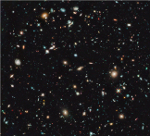
Deepest Space Image

Deepest Space Image

Back from the Voyage.

August 4, 2011

I finished the second full draft of The Parliament of Poets a few days ago. It’s now a readable manuscript, entirely cast in verse.

For decades I really didn’t know how to begin, though I made notes and thought about the book endlessly. I had written The Bower of Nil as a book-length narrative poem thinking it would be a bridge to writing an epic. In my mind, the three sections were based on the Greek choric dance, which I didn’t actually make clear until the ebook edition in 2010. Nevertheless, the enormous amount of reading of philosophy that I had done for The Bower of Nil helped me to understand how to handle and structure a theme around a cultural story in dramatic, literary terms. That in itself was a considerable leap forward from the lyric poetry of Into the Ruins, at times a story told or suggested in lyric sequence. The universal epic scale proved far more difficult, even arduous. It was extremely difficult and challenging to absorb and synthesize the decades of reading, my whole life, truth be told, and beyond my own personal life, into a literary, epic form that might hope to speak to our global age.

It was Virgil who finally made me realize how to begin. He had written out the Aeneid first in prose and then worked it into verse. I thought of that for years. That opened the door for me. And then the time was right.

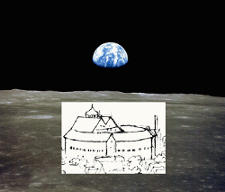
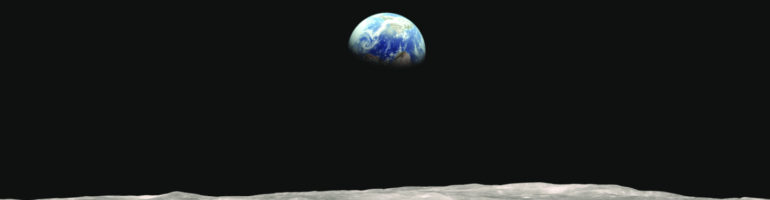
I know I can’t possibly be objective about the book. I’ve been completely wrapped up in it. It will be for others to judge if it flies as a universal epic. For me, after decades, since the early 1980s, I feel I’ve at last crossed a threshold and can look back, as it were, from earth to the moon, back at the earth from the moon, the physical manuscript on my desk proving I have made the voyage.

I have three more drafts planned which I hope to finish by the end of this year, each one working on smaller levels of detail, tying up the loose ends. And then perhaps a few more drafts for further polishing, like a cabochon stone.
Frederick Glaysher

4 Comments

Filed under Epic

Tolstoy and the Last Station of Modernity

Tolstoy and the Last Station of Modernity

August 15, 2010

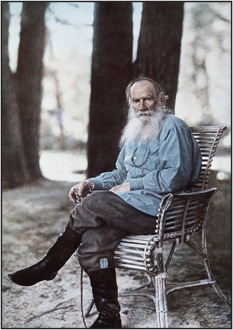
Tolstoy

Leo Tolstoy

After seeing several months ago the movie “The Last Station,” by the director Michael Hoffman, based on Leo Tolstoy’s final year of life and his death at the train station of Astapovo in 1910, I found my thoughts often turning to him. I’ve had a long interest in Tolstoy and his work, having spent considerable time as a student reading large swaths of his journals and other more obscure books during the early 1970s and repeatedly going back to him during intervening years. While the acting of Helen Mirren and Christopher Plummer was superb, the latter of whom I admire having seen Plummer perform live a couple of times at the Stratford Shakespeare Festival in Canada, the movie left me with an uneasy feeling regarding the interpretation of Tolstoy. The film script was based on Jay Parini’s novel, The Last Station, which may be part of the problem, in turn perhaps tracing back to the unsympathetic biographies by Henry Troyat and R. N. Wilson, both derisively presenting Tolstoy as a religious crank and fanatic. Neither biography understands the full weight of who Tolstoy was and what he actually believed and why. Touching on the problem, fearing other biographers would repeat the errors of Troyat, Tolstoy’s daughter Alexandra wrote in 1968, in The Real Tolstoy, that “Troyat . . . shows no respect for Tolstoy’s inner life. He speaks about it in vulgar, cynical expressions…. I fear that the errors in Troyat’s book will be repeated in other works.” Beyond the biographies, skewing also the movie, lies the pervasive nihilism and cynicism of modernity that has no respect or appreciation for any spiritual vision of life, including even a highly universal one, such as Tolstoy’s, for he had embraced, by the last decade of his life, the universal principles and teachings, not only of Christianity, but of all the great religions. To see or set him in a more limited context is to fail to understand him within his own stated terms and the plenitude and scope of his work….

Now available in

The Myth of the Enlightenment: Essays
Forthcoming, September, 2014.

https://www.earthrisepress.net/myth_of_the_enlightenment.html

Frederick Glaysher


3 Comments

Filed under Universality

Leo Tolstoy. Hadji Murad.

Leo Tolstoy. Hadji Murad. 1911.

September 30, 2009

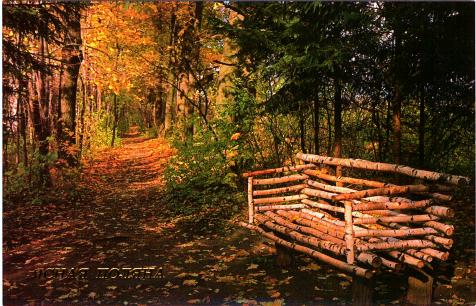
Lev Tolstoy's Favorite Bench

Lev Tolstoy’s Favorite Bench

I recently downloaded and read from Google Books Tolstoy’s novella Hadji Murad. It’s one of the very last pieces of fiction he wrote, finishing it in 1904, published in 1911, the year of his death. The short novel, about 200 pages on an ereader, has always been praised as an exquisitely crafted work of art. Tolstoy allows the structure and interplay of events to speak for themselves, eschewing nearly all temptation to explain to the reader his intentions and meaning. For precisely this reason, the book may be an especially challenging one. Before stating what I think of Hadji Murad, I must touch on my very long relationship with Tolstoy….

Now available in

The Myth of the Enlightenment: Essays
Forthcoming, September, 2014.

https://www.earthrisepress.net/myth_of_the_enlightenment.html

Frederick Glaysher


Leave a Comment

Filed under eReading, eBooks, Reviews

Of True Religion. John Milton.

Of True Religion and John Milton.

February 7, 2010

Milton’s Cottage

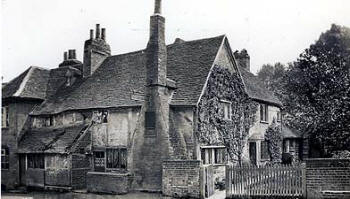
John Milton’s Cottage, Chalfont St Giles

In 1673, a year before his death, John Milton published a pamphlet entitled “Of True Religion, Heresy, Schism, Toleration, and what the best means may be used against the Growth of Popery.” His great poems were all behind him, death before him. Oddly, this pamphlet is little known to the general reader of Milton. After looking through a number of textbook collections of Milton for university courses, published during the last several decades, I was surprised to discover none of them contained “Of True Religion,” yet it was the last piece the man ever wrote. All the more startling is that “Of True Religion” presents a portrait of John Milton significantly at variance with the Puritan caricature of him that is often promoted by scholars in the university. All too often Milton is torn out of his historical time and not seen to be in fact the liberal that he was, clearly headed toward the Glorious Revolution of 1688, which further limited the monarchy and prepared the way for the modern efflorescence of individual liberty and freedom. To distort Milton into a one-dimensional Puritan suppresses the complexity of his actual thinking and life….

Now available in

The Myth of the Enlightenment: Essays
Forthcoming, September, 2014.

https://www.earthrisepress.net/myth_of_the_enlightenment.html

Frederick Glaysher


2 Comments

Filed under Reviews, Universality