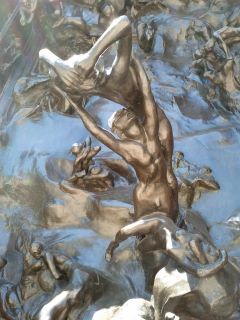
Rodin’s Gates of Hell, Cantor Art Center, Stanford University

Rodin's The Thinker, The Gates of Hell, from Dante

Rodin’s The Gates of Hell, Cantor Art Center, Stanford University, July 1, 2011.

III
The Thinker

Staring into the portal I see humankind
stretched out on the rack of this century,
gassed in the trenches of Europe,
vivisected in the meat shops of Germany,
forced to kowtow in China and India,
in Africa and the archipelagoes,
by the British, the French, the Japanese,
by all those intent on empire,
intent on the worship of themselves.

Staring into the portal I see ourselves
revealed in the terror of what we are,
of what we cannot face, cannot bear,
try always to ignore,
while the cost grows greater and greater,
while like Ugolino we grope over the dead,
the victims of our rapacity,
our devouring lust.
“O Master, the sense is hard.”

Copyright (c) 1999 Frederick Glaysher. My Rodin sequence has a I & II…
https://fglaysher.com/into_the_ruins.html 

Rodin, Gates of Hell, Paolo, Francesca

Rodin, Gates of Hell, Paolo and Francesca

Rodin’s Paolo and Francesca… “our devouring lust.” They’re writhing in Hell. Dante saw them there on his visit… wrought them in immortal song, Rodin in immortal bronze. White’s translation:

“There is no greater grief
Than to recall a bygone happiness
In present misery….

While the first spirit told her tale, the other
Wept with a passionate grief that mastered me;
I felt a faintness, as it were of death,
And like a corpse fell headlong to the ground.”

Apparently, Dante must have had cause to faint…
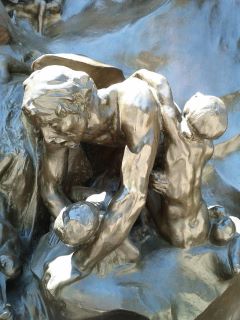
Rodin, Gates of Hell, Ugolino, devouring his children…

“…while like Ugolino we grope over the dead,
the victims of our rapacity,
our devouring lust.
‘O Master, the sense is hard.'”

Copyright (c) 1999 Frederick Glaysher
https://fglaysher.com/into_the_ruins.html

Rodin, Gates of Hell, Cantor Arts Center

Bronze, of course… The Thinker pondering Hell below… perhaps the greatest art work of the 20th Century. Guernica next comes to mind…

Rodin, Gates of Hell, Cantor Art Center

Rodin, The Gates of Hell, Cantor Art Center

One of only two or three full exhibitions, worldwide, of Rodin’s The Gates of Hell.  ‎…awe-inspiring for me. I first saw it in a special exhibition in Detroit in the early 1980s. I wrote a series of poems about it, in my book Into the Ruins, if interested, “Rodin’s Gates of Hell”: https://fglaysher.com/into_the_ruins.html

Rodin, The Thinker, MET

Rodin, The Thinker, MET

…A creative mounting of Rodin’s The Thinker, five or six feet off the floor, from The Gates of Hell. New York Metropolitan Museum of Art, February 11, 2012.
Leave a Comment

Filed under Universality

Rhapsode Amphora, by the Berlin Painter

Rhapsode Amphora, Berlin Painter

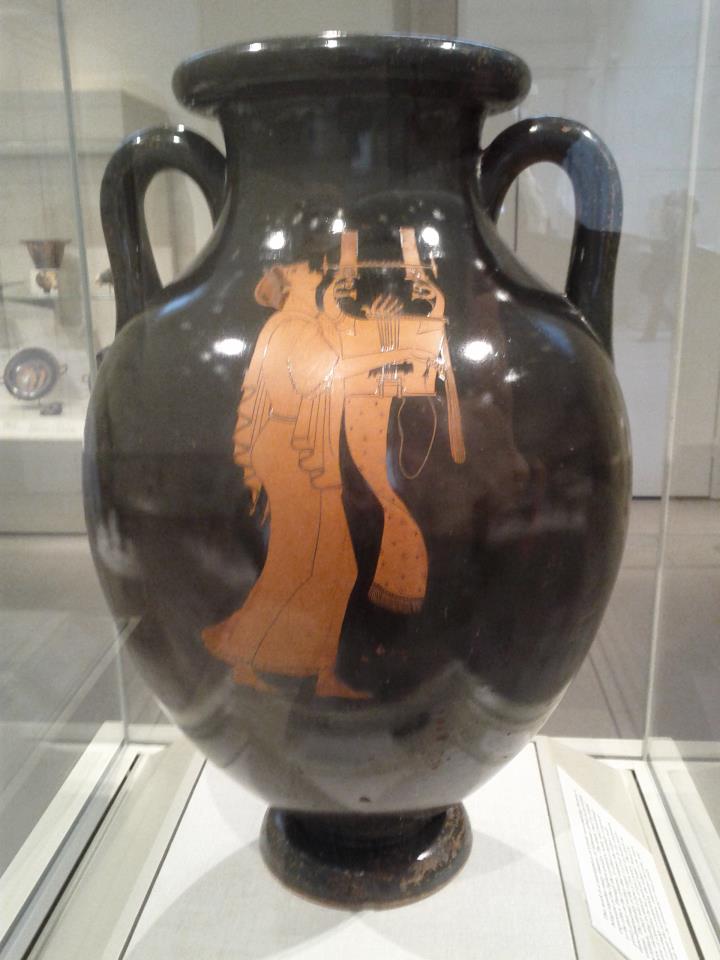
A photo of what I can only think of as the Rhapsode Amphora that I took on a visit in February, 2012, to the New York Metropolitan Museum.

A personal indiscretion… if a fifty-foot tsunami hits New York, forget everything but save this amphora… The artistry of the rhapsode is so  exquisite that none of the pictures I have ever seen or taken do it justice, including what the MET has available on the Internet at the link below.

Rhapsode. “A rhapsode (Greek: ῥαψῳδός, rhapsōdos) or, in modern usage, rhapsodist, refers to a classical Greek professional performer of epic poetry in the fifth and fourth centuries BC.”

Terracotta amphora (jar). Attributed to the Berlin Painter.
Period: Late Archaic Date: ca. 490 B.C. Culture: Greek, Attic ; Gallery 157, New York Metropolitan Museum.

“This work is a masterpiece of Greek vase-painting because it brings together many features of Athenian culture in an artistic expression of the highest quality. The shape itself is central to the effect. Through the symmetry, scale, and luminously glossy glaze on the obverse, it offers a carefully composed three-dimensional surface that endows the subject with volume. The identity of the singer is given by his instrument, the kithara, which was a type of lyre used in public performances, including recitations of epic poetry. The figure on the reverse is identified by his garb and wand. While the situation is probably a competition, the subject is the music itself. It transports the performer, determines his pose, and causes the cloth below the instrument to sway gently.”
https://www.metmuseum.org/Collections/search-the-collections/130015398?rpp=20&pg=1&ft=56.171.38&pos=1

On the reverse, the Berlin Painter has rendered an image of the critic or judge. The picture of the critic on the MET website should not be considered as representing the same quality of artistry expended by the Berlin Painter as that on the rhapsode. The contrary is the case, including the background glazing of the vase around the critic. The rendering is indisputably of inferior quality, of *secondary* stature and importance to the Berlin Painter. In person, before this matchless vase, there can be no mistaking the difference that the judgment of the artist himself makes, and suggests, about the relationship between poetry and criticism.

I believe the Berlin Painter does imply that the ability to recognize something new and the integrity to speak words worthy of it, to bring it to the attention of the polis, if you will, the people, resides with the critic. That is the role of the critic that the Berlin Painter 2,500 years ago wrought on this exquisite amphora. That is what poetry and criticism have lost in the United States of America, if not the entire West. The proper relationship of the poet to the critic and reader has too often been replaced by all manner of dehumanizing theory, decadence, politicization, nihilism, and other corrupt conceptions of the role of the critic, losing his or her civilizing raison d’être, building civilization, rather than tearing it down, all of which have had a devastating impact on the polis.

Frederick Glaysher

Leave a Comment

Filed under Epic

Poetry Reading at the Buffalo Small Press Book Fair

Poetry Reading at the Buffalo Small Press Book Fair

I’ll be reading from the fifth draft of my epic poem, The Parliament of Poets, from 2:30 to 2:45pm.

My other books will be available at the Earthrise Press table from 12-6pm.

I’d be delighted to sign a copy for you. Hope to meet you there!

Author appearance, Saturday, March 24, 2012, 12:00PM — 6:00PM
Karpeles Manuscript Library Museum, Porter Hall, 453 Porter Avenue in Buffalo, NY 14201 USA
https://www.buffalosmallpress.org/

Frederick Glaysher

Leave a Comment

Filed under Universality

UNA-USA Members Day 2012

I was in New York for a few days at the United Nations Association Members’ Day, February 10, 2012, held in the General Assembly. The dozen panelists discussed a wide range of compelling global issues, including,

UN Peacekeeping: Its evolution and operations globally
The Security Council’s new assertiveness in peace and security
Rio+20: Pre-event expectations and potential impact
Millennium Development Goals: Post-2015: What’s next?
Family Care & Women’s Health and Re-productive Rights

UNA Members Day February 10, 2012

https://www.unausa.org/members-day-2012

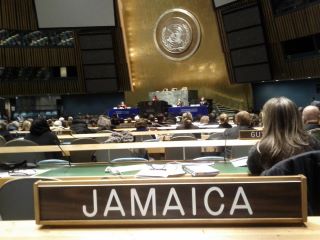
View from Jamaica… in the UN General Assembly Hall, where I sat during the UNA Members Day, Feb. 10, 2012. My tweets are available on my Wall below, if interested in highlights.


UNA Members Day 2012

View from behind Burundi… in the UN General Assembly, where I sat during the afternoon, the UNA Members Day, Feb. 10, 2012. My tweets are available below, if interested in highlights. Susana Malcorra, UN Under Secretary-General of the Department of Field Support, on peacekeeping. An out-standing speaker…

My Twitter highlights follow…

“Millennium Declaration… unprecedented international compact” “signed by world leaders” #unausa #membersday2012 Corinne Woods –(@fglaysher)

“…relentless corporate propaganda” denies global warming. Jeffery Sachs #unausa Members Day — (@fglaysher) February 13 at 7:13am

JFK …make the world safe for diversity…. this small plant.” #unausa #membersday2012 — (@fglaysher)

Kofi Annan “No government has the right to hide behind national sovereignty.”… Ambassador Di Carlo #unausa

Israel, Palestinians….”need to come to terms.” Di Carlo #unausa #membersday2012 —  February 12 at 9:00pm

“Peacekeeping… the whole range… difficult command and control.” Ugo Salinas #unausa #membersday2012 — fglaysher (@fglaysher)

“…institution building so that the peacekeepers can withdraw.” Ugo Salinas #usauna #membersday2012

“Why has [peacekeeping] not really worked? …lack of speed is a political one.” Wolfgang Weisbrod-Weber #unausa #membersday2012 — fglaysher (@fglaysher) i.e., UN tends not to move fast enough to keep up with a developing crisis. The machinery is not in place to allow it to do otherwise.

“Countries don’t want the Secretary-General to have a rapid response force because he might use it.” Wolfgang #unausa #membersdY2012 — fglaysher…

“Peacekeeping …. is based on the willingness of member states.”

FG sitting in the UN General Assembly, at Jamaica, in the morning. 2012

Leave a Comment

Filed under United Nations