Category Archives: Epic

Epic poetry. The Parliament of Poets, by Frederick Glaysher

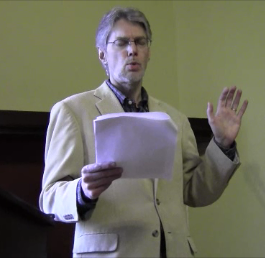
Frederick Glaysher, Buffalo Small Press Book Fair

Frederick Glaysher reading from the fifth draft of his epic poem, The Parliament of Poets, at the Buffalo Small Press Book Fair, Karpeles Manuscript Library Museum, March 24, 2012.

FROM Book III, in medias res, on the moon. Copyright (c) 2012 Frederick Glaysher.

Frederick Glaysher, Reading from The Parliament of Poets, Book III.

Frederick Glaysher, Reading from The Parliament of Poets, Book III.

Reading from The Parliament of Poets, Book III, “Who needs warp drive when I’ve got Queen Mab, / My escort and midwife of my dreams.”

Frederick Glaysher

Leave a Comment

Filed under Epic

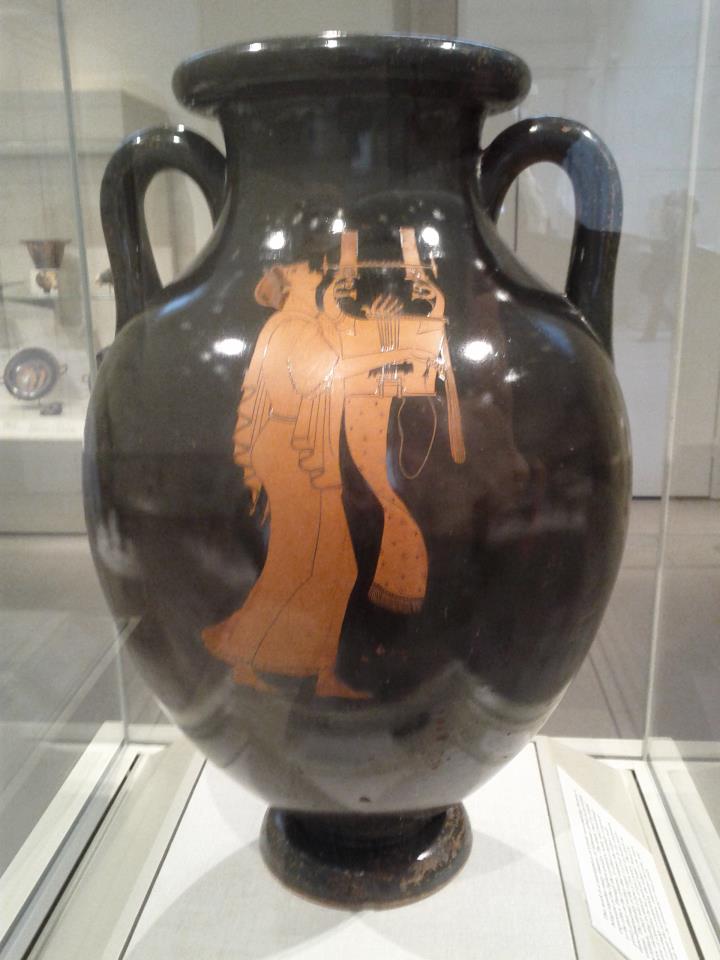
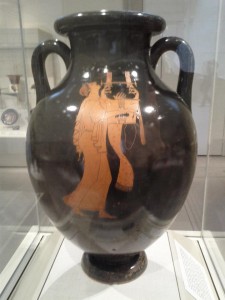
Rhapsode Amphora, by the Berlin Painter

Rhapsode Amphora, Berlin Painter

A photo of what I can only think of as the Rhapsode Amphora that I took on a visit in February, 2012, to the New York Metropolitan Museum.

A personal indiscretion… if a fifty-foot tsunami hits New York, forget everything but save this amphora… The artistry of the rhapsode is so  exquisite that none of the pictures I have ever seen or taken do it justice, including what the MET has available on the Internet at the link below.

Rhapsode. “A rhapsode (Greek: ῥαψῳδός, rhapsōdos) or, in modern usage, rhapsodist, refers to a classical Greek professional performer of epic poetry in the fifth and fourth centuries BC.”

Terracotta amphora (jar). Attributed to the Berlin Painter.
Period: Late Archaic Date: ca. 490 B.C. Culture: Greek, Attic ; Gallery 157, New York Metropolitan Museum.

“This work is a masterpiece of Greek vase-painting because it brings together many features of Athenian culture in an artistic expression of the highest quality. The shape itself is central to the effect. Through the symmetry, scale, and luminously glossy glaze on the obverse, it offers a carefully composed three-dimensional surface that endows the subject with volume. The identity of the singer is given by his instrument, the kithara, which was a type of lyre used in public performances, including recitations of epic poetry. The figure on the reverse is identified by his garb and wand. While the situation is probably a competition, the subject is the music itself. It transports the performer, determines his pose, and causes the cloth below the instrument to sway gently.”
https://www.metmuseum.org/Collections/search-the-collections/130015398?rpp=20&pg=1&ft=56.171.38&pos=1

On the reverse, the Berlin Painter has rendered an image of the critic or judge. The picture of the critic on the MET website should not be considered as representing the same quality of artistry expended by the Berlin Painter as that on the rhapsode. The contrary is the case, including the background glazing of the vase around the critic. The rendering is indisputably of inferior quality, of *secondary* stature and importance to the Berlin Painter. In person, before this matchless vase, there can be no mistaking the difference that the judgment of the artist himself makes, and suggests, about the relationship between poetry and criticism.

I believe the Berlin Painter does imply that the ability to recognize something new and the integrity to speak words worthy of it, to bring it to the attention of the polis, if you will, the people, resides with the critic. That is the role of the critic that the Berlin Painter 2,500 years ago wrought on this exquisite amphora. That is what poetry and criticism have lost in the United States of America, if not the entire West. The proper relationship of the poet to the critic and reader has too often been replaced by all manner of dehumanizing theory, decadence, politicization, nihilism, and other corrupt conceptions of the role of the critic, losing his or her civilizing raison d’être, building civilization, rather than tearing it down, all of which have had a devastating impact on the polis.

Frederick Glaysher

Leave a Comment

Filed under Epic

Catalogue of the Ships

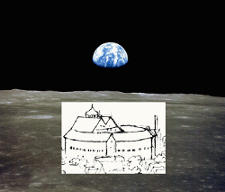
Catalogue of Ships

While I had hoped for three more drafts by the end of 2011, I’ve only completed another one, for a total of three. Life, alas, placed many other demands in my way, intervening in the time and peace of mind I needed.

Yet I managed to write a thirty-page essay on Rabindranath Tagore, which I am told will be published this month in India in the journal Rupkatha.com. I began reading Tagore as a very young poet many decades ago and have often thought of writing about him, but dismissed the idea until prodded by the editor, giving me the determination to take a seeming detour into the months of  reading needed to shape my thinking into form. Actually, I had felt for the last year or so that I had to engage with Tagore at a deeper level before finishing The Parliament of Poets, and now feel he has opened further for me a perspective that is highly congruent with what I have already written.

Homer’s catalogue of ships at the end of Book II of the Iliad suggested the third draft of The Parliament of Poets. I was actually quite surprised by the development. As a young writer I had always had an animus against the form. Reading Melville’s Moby Dick, I found his chapters on the history and practice of whaling infuriating. At times I couldn’t control the impatience I felt with his method, wanted to throw the book across the room! A diligent student, I, nevertheless, wasn’t one who could skip chapters, ploughed through them, while salivating for the thread of the plot to return. As an older and perhaps wiser writer, I have made my peace with the form. The catalogue serves a literary and intellectual purpose I’ve come to respect, indeed, come to realize I need, for the good of my story and my reader, though there might be some out there someday annoyed as I once was. I hope they’ll come as I have to respect Homer and Melville’s practice, among other writers who have found similar devices necessary, and consider there are reasons and purposes that only the epic catalogue can fulfill.

Homer recounting in Book X the warriors of his epic, Agamemnon in Book IV reviewing his troops, Virgil in his catalogue of the Latin forces and the Etruscans, Milton that of the fallen angels, all tell us something very important about the epic drama under way. Such devices open out and broaden the scope and elevation of the poem. How much more needed in a global age when we have come to view the earth even from the moon. How much more necessary in an age that embraces so much in terms of human experience.

 Frederick Glaysher

Leave a Comment

Filed under Epic

Back from the Voyage.


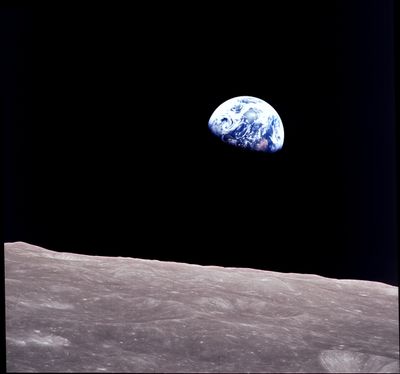
Deepest Space Image

Deepest Space Image

Back from the Voyage.

August 4, 2011

I finished the second full draft of The Parliament of Poets a few days ago. It’s now a readable manuscript, entirely cast in verse.

For decades I really didn’t know how to begin, though I made notes and thought about the book endlessly. I had written The Bower of Nil as a book-length narrative poem thinking it would be a bridge to writing an epic. In my mind, the three sections were based on the Greek choric dance, which I didn’t actually make clear until the ebook edition in 2010. Nevertheless, the enormous amount of reading of philosophy that I had done for The Bower of Nil helped me to understand how to handle and structure a theme around a cultural story in dramatic, literary terms. That in itself was a considerable leap forward from the lyric poetry of Into the Ruins, at times a story told or suggested in lyric sequence. The universal epic scale proved far more difficult, even arduous. It was extremely difficult and challenging to absorb and synthesize the decades of reading, my whole life, truth be told, and beyond my own personal life, into a literary, epic form that might hope to speak to our global age.

It was Virgil who finally made me realize how to begin. He had written out the Aeneid first in prose and then worked it into verse. I thought of that for years. That opened the door for me. And then the time was right.

I know I can’t possibly be objective about the book. I’ve been completely wrapped up in it. It will be for others to judge if it flies as a universal epic. For me, after decades, since the early 1980s, I feel I’ve at last crossed a threshold and can look back, as it were, from earth to the moon, back at the earth from the moon, the physical manuscript on my desk proving I have made the voyage.

I have three more drafts planned which I hope to finish by the end of this year, each one working on smaller levels of detail, tying up the loose ends. And then perhaps a few more drafts for further polishing, like a cabochon stone.

Frederick Glaysher

4 Comments

Filed under Epic