There are two articles from The Guardian that I am responding to in this post. The oldest, from September 2012, at the bottom half of this page. The most recent was published on August 16, 2013:
“Why is self-publishing still scorned by literary awards?
As an increasing number of DIY authors climb the digital bestseller lists, book prizes will have to rethink their entry criteria” https://www.theguardian.com/books/booksblog/2013/aug/16/self-publishing-literary-awards
fglaysher
My, how well represented are the Luddites of the corrupt corporate publishing industry… in the comments.
I don’t want them, and I don’t need them, nor do an ever-increasing number of readers, who are clearly sick of corporate publishing and eagerly choosing independent writers.
Now watch and observe the publishing trolls come forth…
Frederick Glaysher
https://www.fglaysher.com
“Very readable and intriguingly enjoyable. …a masterpiece that will stand the test of time.” —Poetry Cornwall, No.36, England. May 2013.
“A great epic poem of startling originality and universal significance, which is ingeniously enriching the canon of ‘literary epics’ while in every way partaking of the nature of world literature.” —Hans Ruprecht, CKCU Literary News, Carleton University, Ottawa, Canada. June 2013. (see below)
“I found this book to be up to the standards set by Homer. …This book also is very thought provoking as it brings into question what humanity is doing to the Earth and each other.” —LibraryThing
“Most of the contemporary poets and critics claim that epic is not suitable for our modern age. But Frederick Glaysher has proven them wrong.” —Goodreads (more) Bangladesh.
“Certainly wowed the crowd at the library with the performance and the words themselves.” —Albany Poets News
fglaysher WakeUpArgh
In the case of corporate publishers, they have been working very diligently at corrupting the entire publishing industry for decades, in both the USA and the UK. It hasn’t just happened overnight. It’s taken a lot of bribe money in the deceptive form of “advertising,” many millions worth, not to mention the ceaseless takeovers of publishing houses that used to have decent editors in them who weren’t just hacks looking for talking-head and celebrity schlock.
As publishing was taken over and consolidated into the now five mega-media corporations, run by illiterate MBAs and other cultural ignoramuses, looking for and thinking only of “filthy lucre” on the bottom line, the level of literary ability and vision has steadily gone down, increasingly corrupting not only Western Civilization, but World Civilization, as its nihilism has been passed around the globe. The worthless “literary prizes” with which they try to prop up the crude and banal works they foist off as “literature” only proves how utterly corrupt publishing has become. They no longer know what literature or civilization is and means, while arrogantly believing that they alone know and should be allowed to decide who and what receives a hearing with the people, with readers.
Fortunately, the Post-Gutenberg Revolution has now provided the tools with which serious writers of literary fiction and poetry can now bury the corrupt baboons of the boardrooms who cynically dominate the media-scape… as well as the university and cultural domains, and find and chart a new direction for world civilization.
We are at the end of a decadent and corrupt stage of civilization. To the extent that the decline of publishing has played a role in that process, much of it must needs be swept aside if we are to regain our balance and find the solutions to the vast problems that confront humanity.
“The poets that are identified in this fascinating book see a universal brotherhood….” —Amazon Review https://www.fglaysher.com
fglaysher
Incidentally, I notice you’re concealing your identity. Are you a troll for corporate publishers? You sound like one. It has often been alleged that they’re hiring people for spin-control on the Internet, trying to prop up their corrupt and decadent business model. Amazon has been vastly fairer to independent publishers than the corporate exploiters who now suck blood out of the lives of writers and their families, have for many decades, if not the last few hundred years, subjecting readers to their base and shoddy ethical standards. Fortunately, intelligent readers can see through such practices and are increasingly going elsewhere…
fglaysher WakeUpArgh
A troll… as I understand the term is usually used on the Internet, is someone who conceals their identity in order to deceive or harass others, for various misguided reasons. Since my identity is a public one, readily identifiable as such, if you want to google me, for instance, I don’t understand how I could be perceived as one.
As for Amazon, while I do have several books available on it, they are also available, in hard and soft cover and as ebooks, on Barnes & Noble, Kobo, Google Play, and their many worldwide global affiliates. So I’m not exclusively in favor of Amazon, but I indeed do respect Amazon’s business model which is significantly fairer to writers and their families than the publishing model of today and even the last few hundred years, which has basically been to steal the majority of the earnings of a book from authors.
Please don’t repeat all the specious arguments justifying the old system. I’ve heard them ad nauseum from corporate spinmeisters.
If you want to understand the deeper issues of publishing, I recommend starting with Jason Epstein’s Book Business.
fglaysher WorcesterStorey
I’ve responded here to his posts and the criticism of Amazon, which seems to be the only opinion permissible for some defending the publishing cartel. I have not attacked anyone here with aspersions on their character but encouraged others to remain above that level. I stand ready to accept your apology.
For those interested, a similar discussion about corporate publishing that I and Mr “WorcesterStorey” participated in, not a few months ago, but last September, 2012, see my blog The Globe, which includes my posts, and those deleted by a misguided censor on The Guardian, allowing apparently only pro-corporate publishing messages. Surely Murdoch doesn’t own The Guardian? I trust that such an illustrious newspaper as The Guardian shall right the wrong some day when it becomes aware of how unjustly I was treated by the overzealous.
The Globe
The Guardian Resorts to Censorship
fglaysher MartineMcDonagh
The retail distributors are part of the corrupt system of scratching the publishers backs… taking their dirty dollars for helping to keep the system of monopolies going. It works the same way in both the USA and the UK, as with the other interlocking parasites of the corporate publishing system.
Incidentally, I clicked on your name and found that you just created your account this afternoon. Are you a real person or just a publishing troll? Like probably many of the others in these comments? It’s known now that there is even software that allows unprincipled people and corporations to create dozens of false identities for various deceptive and reprehensible reasons:
MartineMcDonagh [click his “name” to verify this for yourself]
Joined: 17 Aug 2013
My identity can easily be verified by any wishing to do so. I’ve been a registered member on The Guardian since, Joined: 29 Aug 2012.
Martine, how can people verify the veracity of your identity?
Frederick Glaysher
Independent poet and publisher
https://www.fglaysher.com
Earthrise Press
https://books.fglaysher.com
fglaysher jae426
In the Soviet Union Andrei Sakharov and other critics were accused of paranoia in an attempt to discredit them. Probably not an effective strategy for publishers take up…
Many, many self-published books are available through various distributors, though many of them are involved in attempting to prompt up the failed paradigm.
Incidentally, here’s a very incomplete list of self-publishers:
Mark Twain, James Fenimore Cooper, Walt Whitman, William Blake, Henry Adams, Ezra Pound, e. e. cummings, Edgar Allan Poe, James Joyce, D. H. Lawrence, A.E. Housman, Gertrude Stein, Anais Nin, Carl Sandburg, Stephen Crane, George Bernard Shaw, Thomas Paine, William Wordsworth, Rudyard Kipling, Thomas Hardy, Virginia Woolf, Henry David Thoreau, Benjamin Franklin, Michel de Montaigne, Friedrich Nietzsche, Johannes Kepler, Alexandre Dumas, Derek Walcott, Upton Sinclair, W. E. B. DuBois, Edwin Arlington Robinson, and Robert Hayden.
I highly doubt that William Blake and many of the writers mentioned above would have hesitated to join the Post-Gutenberg Revolution.
fglaysher
Why would Blake have ever wanted to be published by Faber? …when he was able to, and indeed did, publish himself, in a vastly superior form to anything that that doughty old outfit could have ever come up with on their own.
Nota bene. You’re wrong about Walcott…
“By 19, Walcott had self-published his two first collections with the aid of his mother, who paid for the printing: 25 Poems (1948) and Epitaph for the Young: XII Cantos (1949). He sold copies to his friends and covered the costs.[6] He later commented, “I went to my mother and said, ‘I’d like to publish a book of poems, and I think it’s going to cost me two hundred dollars.’ She was just a seamstress and a schoolteacher, and I remember her being very upset because she wanted to do it. Somehow she got it—a lot of money for a woman to have found on her salary. She gave it to me, and I sent off to Trinidad and had the book printed. When the books came back I would sell them to friends. I made the money back.” [5] https://en.wikipedia.org/wiki/Derek_Walcott
In the Post-Gutenberg Age, think about it… Clay Shirky might be of help:
“It makes increasingly less sense even to talk about a publishing industry, because the core problem publishing solves — the incredible difficulty, complexity, and expense of making something available to the public — has stopped being a problem.” Clay Shirky, “Newspapers and Thinking the Unthinkable.” March 13th, 2009.
fglaysher Lainwilts
Thanks for commenting.
In my view the ever-increasing corporate takeover of publishing from the 1980s on has been one of the most significant factors in the decline of New York and conglomerate publishing, though the cultural undermining runs much deeper, with publishing merely a symptom of it.
The Post-Gutenberg Revolution presupposes and necessitates a new relationship between the reader and writer, requiring a deeper level of responsibility on the part of both the general reader and the highly trained and often gifted academic or professional reader or critic. That recognition has not yet received its full due, but some are beginning to realize it, and, with time, I believe its efflorescence will continue to play out on the Internet. Coterminously, historically, in all civilizations around the globe, there has always been a very simple and clear way to separate the sheep from the goats. That too will become clearer on the Internet.
Demonizing Amazon, which is only one online bookseller, will not save the corrupt corporate publishers from their justly deserved fate… fortunately, for literature.
fglaysher jae426
You seem to be using again a character attack in your opening words. Please let us stay with the ideas involved, basically how corrupt corporate publishing has become and the historical fact that they are no longer needed by writers to reach the reader.
Blake died in 1827… and he chose to publish his beautifully illuminated manuscripts, etchings and painting and all… on his own, without one of the corrupt and venal publishers of his time. Perhaps Blake had in mind the experience of Cervantes with his worthless, sleazy publisher, who stole the book and never paid him anything for it.
Fortunately, writers today can market their books to the entire world through AMAZON and other online sellers, completely circumventing the Old Boy Network who seem utterly panic-stricken by the Writing On The Wall (digital in this case). They should be. Like the music executives, a lot of will soon be out of a job. And then what will they do? They’re not capable of writing books themselves…
fglaysher Lainwilts
The vast majority of “awards” are utterly worthless… if not fraudulent, especially the ones that use “an entrance fee,” basically to raise money to line the pockets of the judges and publish the “winning” entry. What self-respecting writer would want such a contemptible “award”?
Elsewhere in these comments someone pointed out that other “awards” are a racket run by the corrupt corporate publishers to promote and market their often grossly illiterate and decadent titles… for dirty dollars. Peasants will always grope for those coins…
Writers worthy of the Tradition will take Saul Bellow’s advice on Deconstruction: “Real writers would bury them,” exactly what must now be done with corporate publishers… global now.
fglaysher WorcesterStorey
Dear Mr WorcesterStorey,
Please consider that more character attack and aspersions do not speak well of your own character. Sir, try to respect other people, since we’re talking about books and culture. You’re entitled to your own opinion but the methods used in a public space should be those of a gentleman.
I find particularly disturbing your abusing the name of Dr Hans-George Ruprecht, who is a highly educated, sensitive reader, and a distinguished scholar of semiotics. I invite you and others to consider his credentials on his Carleton University webpage. Such a man of integrity would not speak lightly of my epic poem or any book.
Ruprecht, Hans-George
His books can be found on Amazon:
https://www.amazon.com/s/ref=nb_sb_noss/180-0351198-7292752?url=search-alias%3Daps&field-keywords=Hans-George%20Ruprecht
He is the host of CKCU Literary News, broadcast in Ottawa, Canada, in three languages, English, German, and French. His interview of me can be found at https://cod.ckcufm.com/programs/414/13077.html
It would be gracious of you to apologize for your unkind and unfair words.
fglaysher WorcesterStorey
You’re still evading the derision with which you treated Dr. Hans-George Ruprecht and other reviewers of my epic poem, The Parliament of Poets, and ignoring their independent judgments of my book. How interesting and revealing.
As for the corrupt and decadent corporate purveyors of talking-head and celebrity schlock, indeed even pornographic smut, pouring all that into the soul of Western Civilization, rest assured, my vehement antipathy is undying, and for those who help to prop it up. All the little people in pre-war Germany were complicitous.
Your assumption is predicated on the notion that corporate publishing and editors have some special ability to identify and promote authors. Nothing could be further from the truth. They are economic self-servers pouring out propaganda justifying their deficient system, capable of only recognizing and promoting the decadence to which they are inured. That the media is in the hands of but a few has only exacerbated the situation but will not prevent the change that has and is coming.
All the king’s horses and all the king’s men could not put Humpty Dumpty together again…
September 2012 Article:
The Guardian Resorts to Censorship, regarding its article “Are Amazon reader reviews killing off the critic? News that a commercial operation has been rigging customer endorsements is a reminder of the virtues of professional critics.”
I’m shocked to have to report that The Guardian has responded to several of my comments on the above article by what I consider censorship of my posts, if not RIGGING the comment section. While they’ve deleted a number of mine, they’ve allowed a number of others that ridicule and deride my views to remain. I am therefore posting here all of the messages involved so that others interested might judge for themselves. (Oddly, a few hours later, The Guardian has restored a couple of the posts below. Not all were ever deleted.)
I believe The Guardian‘s extreme reaction to my comments is partly explained by its not understanding the Post-Gutenberg Revolution, as demonstrated in the following article it ran in April: Tim Waterstone warns Amazon tax avoidance could kill off bookshops The UK apparently lost about one fifth of all books stores on High Street, i.e., main street as we say in the USA. Since they’re considerably behind the USA in terms of grappling with the ebook revolution, they do seem panic stricken about it. But censorship is not the way to handle people and writers who realize there is no turning back.
My original response below to the article “Are Amazon reader reviews killing off the critic?” and post to Facebook:
A thoughtful piece on some of the implications of fraudulent Amazon book reviews…
“…the Amazon scandals reaffirm the importance of the much-maligned traditional book review. Reviews in, say, newspaper books sections (I’m biased) are vital in offering a properly critical (often negative) opinion of new books: a necessary accompaniment to (also important) articles in the same sections that simply showcase books, or report interviews with authors: these can all too easily become elegant exercises in PR. The book reviewers are chosen by commissioning editors, they don’t choose themselves, and their judgments, if the editor is doing his job properly, must be properly backed up. Yes, there’s only one wise voice rather than the wisdom of the crowd, but these critics are convincing, independent, entertaining and trustworthy enough that, time and again, they are paid to offer their opinion. And not in the way that Todd Rutherford was paid, by the authors of the books themselves.”
My 1st response in the comments on The Guardian:
fglaysher
29 August 2012 1:21PM
Here’s the problem. The Guardian, The New York Times Book Review, et al., can be and are just as corrupt as some on Amazon, in various ways, through the advertising dollars of publishers, scratching one another’s industry backs, sharing and promoting only the commonly shared points of view, and so forth. Any sophisticated reader knows the filtering worldview, if you will, of TLS, The New York Review of Books, The Boston Review, The Nation, The National Review, and the list goes on endlessly. Each has their NARROW little view and conceptions, precluding anything that’s different, is the truth of it.
Put it another way, as this author of The Guardian article does, “The book reviewers are chosen by commissioning editors, they don’t choose themselves, and their judgments….” Then what are they good for? They’re bought and paid for hacks and deceivers just like Todd Rutherford’s on AMAZON!!! They’re NOT “independent.” Editors who imagine they are the enlightened gatekeepers of civilization deceive themselves and their readers. The Post-Gutenberg Revolution is about opening up beyond that kind of thing.
The old publishing model IS DEAD!! Understand and Get it!! Writing and publishing must be about the Reader! Editors trying to control it are still invariably skewing the results for their publishing buddies. It is well known now that traditional publishers are paying people to defend and prop up their deficient paradigm.
Literature 2.0 is predicated upon a different model.
My 2nd response:
fglaysher
29 August 2012 9:14PM
Response to Skalholt, 29 August 2012 4:27PM
All of the arguments you use are the usual, hackneyed ones of the corporate publishers, who seek to maintain and extend their lucrative stranglehold over what receives a hearing in modern culture, all of which is nothing more than an extension of the received wisdom of the university, and guarantees publishers receive unto themselves the bulk of the wealth a book produces, while giving the most contemptible pittance to the writer, after having often sacrificed and labored interminably on the volume.
Corporate publishers and the universities have one thing in common. They’re both as bankrupt and naked as the proverbial emperor. No perceptive person fails to realize the media has long been a lackey to both of them. Online media needs to wake up and start serving the best interest of its readers, instead of extending a willing hand to the ruling despots, who are plunging to their just fate, that of the former music executives and labels, Kodak, and so on.
You’re defending a rearguard action. I urge you and others who share such thinking to sally forth into the future! Editors will have to work harder, but the broad-brush stroke that there’s nothing but trash out there is utterly false. As has been widely recognized, the corporate publishers have been churning out an awful lot of trash for decades… Literature 2.0 holds out the promise that was destroyed when the corporate bean-counters got their hands on the industry… Those who are capable and far-seeing are seizing the opportunity.
My 3rd response (Still DELETED):
fglaysher
29 August 2012 10:07PM
Response to paullaity, 29 August 2012 7:57PM [AUTHOR of the article]
“We might well be guilty of reviewing too many books from the prestigious publishers.”
The Guardian doesn’t have the same policy as The New York Times Book Review, as admitted by the editor Sam Tanenhaus of “reviewing only books that our readers can find in bookstores”?
“…certain titles are likely to be of most interest to our readers.”
Do those “certain titles” just happen to be the ones that the corporate publishers take out costly advertisements for? Sometimes full pages? Perhaps to the tune of 14,000 GBP, or whatever? The “prestigious” reviewing media, on both sides of the pond, is no better than the unethical on Amazon, which media allows it to go on, looking the other way, what is, admittedly, reprehensible on the part of some authors. But that does not mean every independent writer is buying reviews, nor that every independent writer is an illiterate hack. The imprimatur of a corporate publisher, for people who are truly literate, has steadily been declining for decades, for all the reasons plaguing modern culture. It’s not the corporate bean-counters who are going to revive it, but the independent spirits who loathe them with a ferocity that shakes them to the core, for what they’ve done to the culture.
The Gurardian needs to decide with whom it stands. Readers or the corrupt plutocrats of publishing?
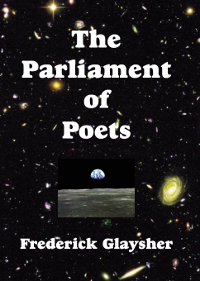
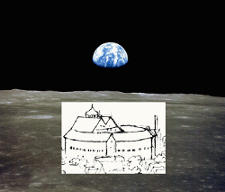
I emailed The Guardian on August 26 a digital Advance Review Galley of The Parliament of Poets: An Epic Poem, which will be published in November, and takes place partly on the moon, at the Apollo 11 landing site, the Sea of Tranquility. Apollo calls all the poets of the nations, ancient and modern, East and West, to assemble on the moon to consult on the meaning of modernity. I believe it is both the first epic poem in the English language in 345 years and the first global, universal epic.
I don’t want, and I don’t need, a corrupt corporate publisher, nor any of the despicable reviews it *buys* in The New York Times Book Review, if that’s the only way they’d ever review it, and other supposedly independent review magazines that gullible readers trust.
I invite The Guardian to consider reviewing The Parliament of Poets: An Epic Poem. It will be available for purchase in the United Kingdom and worldwide as a hardcover book printed outside London, in the USA, and in Australia, shipped and delivered to almost any place on earth. It will also be available as an ebook through several major ebook vendors, Amazon, Kobo, Google eBookstore, and in the Kindle and ePub formats for any device that can read them. [UK: W.H.Smith, Amazon.uk, Amazon.uk, Blackwell, Waterstones, alibris, Word Power Books (Scotland), Bertram ]
I have long respected The Guardian. I want to respect it more. Choose the Post-Gutenberg Revolution.
My 4th Response:
fglaysher
29 August 2012 10:21PM
Response to Skalholt, 29 August 2012 9:39PM
In my view, a lot of the readers people seem to think highly of are actually part of the problem. Their going down with the corporate publishers would actually improve things for the prospect of literature and the culture.
Ultimately, the Post-Gutenberg Revolution has provided a way for the independent writer to go around all of them, if that’s what it has to come to. Amazon, Kobo, Google, and all their affiliates can never obtain a monopoly, take it over from the traditional publishers. Any writer on the face of the earth can now produce their ebooks for $39.00 USD with Jutoh, a web server with a shopping cart, and Paypal, which services credit cards from over 190 countries: Earthrise Press eBooks, A Post-Gutenberg Publisher – DRM free
My 5th Response: (Still DELETED posted first time)
fglaysher
30 August 2012 1:51PM
Response to reedandwright, 30 August 2012 1:03AM
I enjoyed your delightful parody! Thank you for reading or at least skimming the first few pages of my epic poem, The Parliament of Poets, presumably from my ebook site at https://books.fglaysher.com (BOOK I is a free PDF download) or was it from the copy I emailed The Guardian?
After a a good laugh all around, I invite you to answer the serious issues that I and others raise.
I note that all of your messages, which I’ve read, listed under your profile, support the traditional publishing establishment. While you make some good points, overall yours is a rearguard action.
In the spirit of good fun, I’d parody you back, but, since you’re hiding your real identity, I shan’t bother.
I notice from a post linked to from your profile reedandwright that you say: “(though yes, I’d much prefer it if the ebook had never existed….).” Please explain what you have against the ebook.
reedandwright that you say: “(though yes, I’d much prefer it if the ebook had never existed….).”
My posts still on The Guardian the last time I checked:
fglaysher
2 September 2012 2:02AM
Response to BillyMills, 30 August 2012 6:05PM
I respectfully disagree regarding Literature 2.0, while paradoxically agreeing in a sense. The constituents of literature are literary, aesthetic, and intellectual. They can be lost or weakened during decadent periods, but can never be changed, I agree, in Wilde’s sense. However, a massive change of the “delivery system” on the scale of the Post-Gutenberg Revolution, like that of the original Gutenberg Revolution, does and will change the environment within which and how Literature 2.0 is conceived and receives a hearing, and, indeed, responds, now, today, back to its critics and opponents, especially the criticasters, theooorrrists, and hacks of the day. To state the obvious, although Samuel Johnson basically set the standard, he didn’t have the Internet…
fglaysher
2 September 2012 2:27AM
Response to Mexican2, 30 August 2012 7:01PM
“And how is “interest” arrived at – because one could reasonably compare, say, a Secker/Harvill catalogue and a period of reviewing in the Guardian and conclude that the prioritising in both vaguely maps over each other. As often does a publisher’s marketing budget with review coverage (which is not for one moment to suggest reviews are bought). Perhaps it’s just one of those things where everybody agrees independently that this is what “we’re all” interested in? But what does that mean exactly?”
Why merely suggest it? How can a conscientious mind say anything else? One could easily conclude the same about The New York Times Book Review, The New York Review of Books, and, pains me the most, TLS, because they’re the best of the lot, in my opinion, have a memory, at least, often, but perhaps tainted too by advertising dollars, and the small vision of the age, while the others definitely are… I say it pains me because I’ve been a reader of all their pages for over thirty years.
What is to be done when the literary reviews leave off literature, for the already written? Drivel… Serve the contempt and “dirty lucre” of their advertisers, not the best interests of the culture and its readers?
fglaysher (Still DELETED)
2 September 2012 2:00PM
Response to WorcesterStorey, 30 August 2012 4:19PM “If your work really is the best of its kind in 3 centuries or whatever you claim, I can’t think why you feel the need to constantly plug it in this thread. You obviously know your way around the current self-publishing media so why try flogging it to death here? Intelligent people aren’t generally impressed by egotistical boasting.”
You have misread what I stated or have accidentally … distorted my meaning. I stated that my epic poem is the first one in the English language in 345 years, not that it is the best, which is a judgment for readers and critics to make. But it is merely a statement of fact to say that there is no epic poem in the English language worthy of the name since Milton, which has been said by many literary critics through the years and decades. Robert Southey’s Madoc, for instance, does not merit comparison, nor Hiawatha, nor does Cowper’s mock-epic The Task; Ezra Pound’s Cantos are a fragment, laced with antisemitism and a bizarre economic theory, Merrrill’s Changing Light at Sandover is also a mock-epic, and so on.
I have written a serious epic poem within the Western tradition and English letters. No poet could write such a poem without realizing it, for the epic requires not a moment of inspiration, like a lyric, but an act of will, which is one of the reasons why it has usually been judged as the most demanding literary form.
Milton, it should be noted, realized what he had written, and was not reluctant to say so, even within the poem itself. His prose, for instance, demonstrates he understood for decades what he was up against and strove to vie with the greatest poets of the epic tradition. It may shock readers today who are habituated to small, personal postmodern songs of self to hear someone make the claim, as I do, that I have written the first epic poem in 345 years, but it is merely to state a fact, for the manuscript sets on my desk. It is not something I am dreaming about writing. Those days are at long last, for me, in the past. Now it is time for others to judge. No person who hasn’t read it, however, can make the claim that it doesn’t exist.
fglaysher
2 September 2012 2:19PM
Response to Mexican2, 2 September 2012 1:58PM
Thank you for replying and explaining so clearly your thinking. I couldn’t agree more with you, on all counts. I believe it can all be said fairly about reviews too over here in the US that they’re about “those authors who were truly newsworthy yesterday, yesteryear.” The focus is on the “already written.” Ultimately I don’t really blame the periodicals. The problem runs very deep into the cultural fabric of Western civilization. We’re at the end of a very long period of various visions and conceptions of life having run their course. Exhaustion lies all around, and few can conceive of anything else other than rewriting the Wheel… the popular, the crude, and so forth, fill the vacuum, for a while. More perceptive minds move on, and eventually will obtain a hearing…
Samuel Johnson was so perceptive on this kind of thing.
fglaysher
2 September 2012 3:25PM
Response to reedandwright, 30 August 2012 1:03AM (Posted a 2nd time)
I enjoyed your delightful parody! Thank you for reading or at least skimming the first few pages of my epic poem, The Parliament of Poets, presumably from my ebook site and the free PDF of BOOK I. Or was it from the copy I emailed The Guardian?
After a a good laugh all around, I invite you to answer the serious issues that I and others raise.
I note that all of your messages, which I’ve read, listed under your profile, support the traditional publishing establishment. While you make some good points, overall yours is a rearguard action.
In the spirit of good fun, I’d parody you back, but, since you’re hiding your real identity, I shan’t bother.
I notice from a post linked to from your profile reedandwright that you say: “(though yes, I’d much prefer it if the ebook had never existed….).” Please explain what you have against the ebook.
fglaysher
2 September 2012 9:06PM
Response to Mexican2, 2 September 2012 7:03PM
I thank you for the suggestions. It is the usual list, however, all of which I’ve read long ago or brooded over, reading good-size chunks.
Walcott’s Omeros is not really an epic but more of a novel in narrative verse; the Prelude is a rambling study of Wordsworth’s own mind, as has often been said; Browning’s The Ring and the Book is another narrative story, not an epic properly speaking. There are a lot of those since Milton, none of which are epics. You list many of them. Byron never finished Don Juan and famously admitted he had no plot, just sat down and starting cranking it out, and didn’t know how to end it… Paterson is a small time vision. While I love Tennyson’s Idylls of the King, think it’s one of the greatest books in the English language, one of the models of my own verse, it must be conceded that it is not an epic but a retelling of selected portions of the Arthurian myth. The title of Whitman’s poem says it all… Zukovsky, Pound, and Olson do not merit the title. While many want to laud the Cantos as an epic, Pound admitted to Donald Hall in a late interview, in one of Hall’s early books, that he had no plot or vision, and the fragments remained unfinished at his death. Southey’s Madoc was plain weird and anyway never stuck to the culture. Merrill’s ouija board fantasy is a farcical would-be mock-epic, at best.
My epic poem is finished and sets on my desk. It was serialized throughout this summer in the manner of Charles Dickens and other 19th Century writers on my ebook site, Earthirse Press eBooks. It will be published in hardcover and as an ebook, both Kindle and ePub formats, in November.
If interested, I survey epic poetry, both ancient and modern, in my essay “Epopee,” in my book The Grove of the Eumenides: Essays on Literature, Criticism, and Culture, available worldwide.
The Parliament of Poets is not only the first epic poem in the English language in 345 years, but also the first global, universal epic, one that raises a world-embracing song for our time. That is what I set out to write as early as 1982. It is now up to readers to decide whether or not I have achieved what I set out to accomplish.
A very significant portion of the poets and writers throughout English and American literature were self-publishers. We read them still today. You have mentioned many of their names. So it is not true as the article here suggests that self-publishers are a reprehensible bunch. They have given us much of English literature.
Click here for all of my comments on The Guardian, except those here that were DELETED by their censor, not moderator, in my opinion.
Frederick Glaysher