The Globe
msgbartop
The Global Age. A Writer's Journal & Blog. Frederick Glaysher
msgbarbottom

24 Jul 11 Tolstoy and the Last Station of Modernity

Tolstoy and the Last Station of Modernity

August 15, 2010

Tolstoy

Leo Tolstoy

After seeing several months ago the movie “The Last Station,” by the director Michael Hoffman, based on Leo Tolstoy’s final year of life and his death at the train station of Astapovo in 1910, I found my thoughts often turning to him. I’ve had a long interest in Tolstoy and his work, having spent considerable time as a student reading large swaths of his journals and other more obscure books during the early 1970s and repeatedly going back to him during intervening years. While the acting of Helen Mirren and Christopher Plummer was superb, the latter of whom I admire having seen Plummer perform live a couple of times at the Stratford Shakespeare Festival in Canada, the movie left me with an uneasy feeling regarding the interpretation of Tolstoy. The film script was based on Jay Parini’s novel, The Last Station, which may be part of the problem, in turn perhaps tracing back to the unsympathetic biographies by Henry Troyat and R. N. Wilson, both derisively presenting Tolstoy as a religious crank and fanatic. Neither biography understands the full weight of who Tolstoy was and what he actually believed and why. Touching on the problem, fearing other biographers would repeat the errors of Troyat, Tolstoy’s daughter Alexandra wrote in 1968, in The Real Tolstoy, that “Troyat . . . shows no respect for Tolstoy’s inner life. He speaks about it in vulgar, cynical expressions…. I fear that the errors in Troyat’s book will be repeated in other works.” Beyond the biographies, skewing also the movie, lies the pervasive nihilism and cynicism of modernity that has no respect or appreciation for any spiritual vision of life, including even a highly universal one, such as Tolstoy’s, for he had embraced, by the last decade of his life, the universal principles and teachings, not only of Christianity, but of all the great religions. To see or set him in a more limited context is to fail to understand him within his own stated terms and the plenitude and scope of his work.

Born of aristocratic lineage, Tolstoy inherited his elite position in Russian society, along with the enormous estate of Yasnaya Polyana, south of Moscow. At thirty-four in 1862, he married Sophia Behrs, when she was eighteen years old. By all accounts they lived a happy domestic life together for many years. After his crisis of faith, discussed in My Confessions (1878), while he found the answers for his spiritual and intellectual struggles in his religious studies and books, they began to experienced an increasingly strained relationship. Sophia’s personality was much given, as she described herself, to the lightness of the social world she had been born into, growing up in Moscow in the circles of the Tsar’s court. By her own recognition, Tolstoy had a much deeper inner life of the mind and sensibility. Their relationship was often strained for the rest of their lives. Torn between love and gratitude to her and a desire to bring his life and ideals in line with his beliefs, he and Sophia struggled on together. In a letter dated June 8, 1897, found concealed in his study after his death, published in Paris in Figaro, December 27, 1910, which Tolstoy apparently had never sent to Sophia, Tolstoy dreamed about leaving her and explained his motives better than he eventually did when he actually left her more than a decade later:

For a long time, dear Sophie, I have been suffering from the discord between my life and my beliefs. I cannot force you to change your life or your habits. Neither have I hitherto been able to leave you, for I felt that by my departure I should deprive the children, still very young, of the little influence I might be able to exert over them, and also that I should cause you all a great deal of pain. But I cannot continue to live as I have lived, during these last sixteen years, now struggling against you and irritating you, now succumbing myself to the influences and the seductions to which I am accustomed and which surround me. I have resolved now to do what I have wished to do for a long time: to go away. . . . Just as the Hindoos, when they arrive at the sixtieth year, go away into the forest; just as every aged and religious man, wishes to consecrate the last years of hislife to God and not to jesting, punning, family tittletattle, and lawn-tennis, so do I with all my strength desire peace and solitude, and if not an absolute harmony at least not this crying discord between my whole life and my conscience. (Tolstoy, Romain Rolland, p. 181)

Tolstoy similarly once wrote to his sister, who was a nun in the Russian Orthodox Church, “How fine for the Buddhist when he grows old—he goes off to the desert.” It was to his sister and the Shamardino monastery that Tolstoy first fled in 1910, though he quickly gave up on the notion of staying there and headed south towards his summer home in the Crimea. What is often lost sight of in our disbelieving age is that religious retreat in advanced years was an ideal that Tolstoy respected and wished to honor in fact and deed. Sophia, it should be noted, was diagnosed by more than one doctor as mentally ill, a fact recognized by his son Sergei in a letter to his father, after his flight in 1910, acknowledging that it would have been better had they separated many years earlier. The movie fails to do justice to this complexity, presenting Sophia as far too much the victimized realist of an impractical zealot of a husband. What has come to be a common interpretation of Tolstoy is completely false. That Tolstoy could continue to study and write under such conditions is a testament to the strength and integrity of his character and soul.

Like many writers, Tolstoy anguished, for years, over his inability to bring his life into balance with his ideals. Alexandra quotes from his private diary the following passage:

If I heard about myself from the outside, as of a person, living in luxury, with police guards, grabbing all he could from the peasants, putting them in the lockup, and professing and preaching Christianity, and handing out small coins, and hiding behind a sweet wife while I did all these base things—I could not but call him a scoundrel! And that is what I have had to submit to, so that I could free myself from human fame and live for the sake of my soul. (Tolstoy: A Life of My Father, 1953, p. 466)

On another occasion, he writes, “Help me, O Lord. Again I yearn to go away, and I dare not. Nor can I give up.” These passages demonstrate the extent to which he fought for years with the dilemmas of his own existence, seeking resolution, some way out and forward. His inheriting great wealth and position became for him a burden and contradiction of the sincerity of his religious beliefs, as they developed and evolved, and weighed heavily upon him. Eventually, seeking to free himself, he legally passed ownership of his estate and holdings to Sophia and the family. All his religious writings, several books and many pamphlets, plays, and short stories can be properly understood only when approached in the light of this struggle. It explains why he lived in such a simple way that many visitors to Yasnaya Polyana recorded their surprise upon actually meeting him and witnessing it for themselves. The only solution for Tolstoy was what it was and is for all great writers. He had to write his way through his dilemmas, create for himself the role and persona that resolved his deepest conflicts, and those of his time. That is what all the religious works are about. By the end of his last decade, he’s achieved it, and then, finally, he’s ready, to follow the way of the ancients, set an example, remind the world, in deed as well as word, of the spiritual journey of life, round out the fullness of his own life.

By Tolstoy’s own testimony, after the years of happiness with Sophia, after writing his early novels and stories, including War and Peace and most of Anna Karenina, he experienced a searing spiritual crisis, feeling his life had become meaningless, which impelled him on a search for meaning and purpose. As recounted in My Confessions(1878), during his early years prior to his marriage, he states,

I killed people in war and challenged to duels to kill; I lost money at cards, wasting the labour of the peasants ; I punished them, fornicated, and cheated. Lying, stealing, acts of lust of every description, drunkenness, violence, murder — There was not a crime which I did not commit, and for all that I was praised, and my contemporaries have regarded me as a comparatively moral man.

He further emphasizes that he reached a point where “life had no meaning at all.” Overwhelmed by the emptiness of his existence, he turned to the study of philosophy, but eventually came to believe that there must be more than reason:

From the beginning of the human race, wherever there is life, there is the faith which makes life possible and everywhere the leading characteristics of that faith are the same.

From his study of Buddhism, Islam, and Christianity, as early as 1879, Tolstoy arrives at the understanding that he is “a part of the infinite whole” and in “the answers given by faith was to be found the deepest source of human wisdom,” while rejecting “the unnecessary and unreasonable doctrines” that had crept into all of the great religions. Initially, he returns to the Russian Orthodox Church, but soon finds it suffered from many irrational doctrines, what he would call after his 1901 excommunication “sorcery,” leading to his quest for the truth of Christianity, and all religions, that lasted until the end of his life in 1910.

A hundred years later, part of the difficulty many people may have in understanding Tolstoy involves today the pervasive nihilism of the academic and cultural establishment, which since Tolstoy’s death, has continued to drain away all spiritual import and nuance, not merely from Tolstoy’s work, but from literature and life. Western civilization itself has become suffused with nihilism, identified with it, the ruling myth celebrated everywhere has become the ascendance and triumphalism of a gloriously secular nihilism, passing the disease around the world, to all countries and cultures, so that the remedy can now only be found and administered in a truly global context. Far beyond the confines of the literary, intellectual, academic milieu, East or West, the ethos of nihilism, inculcated into the young and the general culture, pervades, in its local variants, every region of the globe. Tolstoy himself was highly aware that the general direction of culture was set in a direction away from religious belief and understood his efforts as a response to it, as when he said of Nietzsche, “What savagery! It is terrible, so to drag down Christianity!” Similarly, Tolstoy rejected the applicability of a solely materialistic understanding of the human being, whether by Marx or Thomas Henry Huxley’s defense of Charles Darwin in his Romanes Lectures of 1894. Tolstoy states, “the law of evolution runs counter to the moral law: This was known to the ancient Greeks and Hindus. The philosophy and religion of both those peoples brought them to the doctrine of self-renunciation.” It was often against the decline of a spiritual and moral understanding of the human being that Tolstoy understood himself as writing and working, though even he underestimated the force of nihilism as manifested in 1917. In a preface to Tolstoy’s short novels, Philip Rahv observed, “Tolstoy resisted the catastrophic ruin of the traditional order by straining all the powers of his reason to discover a way out.”

As recorded in an often-cited journal entry, the idea had already occurred to Tolstoy when he was twenty-seven years old that the world needed a new religion, one purged of the false doctrines of organized Christianity:

A new religion corresponding with the present state of mankind; the religion of Christ but purged of dogmas and mysticism–a practical religion, not promising future bliss but giving bliss on earth.

After his religious crisis, as early as 1884, he took note of his intention of compiling the sayings of religious sages and thinkers into a single volume. During the last decade of his life, he finally began the compilation in earnest, resulting in several different versions of it, variously titled, Thoughts of Wise MenA Calendar of WisdomA Circle of Reading, with the final edition in 1910, The Path of Life. Tolstoy spent much of his energy on the book, compiling and refining. He himself considered it as the most important work of his life, as he once wrote, “If it is granted me to finish this work, it will be a complete statement of my world outlook.” He continually simplified and revised the quotations and passages to the point that he advised translators not to look for the original pieces in Confucius, Buddhism, or wherever, but to base their translations on his own free-renderings. Near the end of his life, far ahead of his time, he couldn’t understand why people didn’t use The Circle of Reading more. While he understood that a writer cannot create his own religion, he was caught in the dilemma of finding all the existing forms unfulfilling.

Throughout the last thirty years of his life, Tolstoy was opposed to the violence in Russia advanced by the radicals, Marxists, and socialists of his time. In a journal entry he writes,

Socialists will never destroy poverty and the injustice of the inequality of capacities. The strongest and more intelligent will always make use of the weaker and the more stupid. Justice and equality in the good things of life will never be achieved by anything less than Christianity, i.e., by negating oneself and recognizing the meaning of one’s life in service to others.

His background in and experience of the ruling aristocratic class and ethos provided Tolstoy with an acute understanding of power and its endless corruptions. Far from being naive about power in society, he understood that human beings had to have a change of heart to influence society at the deepest level. The bombs and bullets of the revolutionaries were anathema to him and would produce only another tyranny, as they indeed did, one of the most horrible and blood-thirsty tyrannies in the history of humanity. Elsewhere, Tolstoy observed, “The object of socialism is the satisfaction of the lowest needs of man: his material well being. And it cannot attain even this end by the means it recommends.” Similarly, in “An Appeal,” “Even if that should happen which Marx predicted, then the only thing that will happen is that despotism will be passed on. Now the capitalists are ruling, but then the directors of the working class will rule.” In 1905 in “The End of the Age,” he wrote, “Nothing demonstrates so clearly the increasing enslavement of nations as the growth, spread, and success of socialistic theories.” By the last decade of his life, he had long since concluded that only a deep spiritual change could truly ameliorate the condition of humanity.

Arguing always against the violence of socialism and the Marxists, Tolstoy, unfortunately, interpreted the New Testament in such a way that non-resistance to violence prevented him from being sufficiently practical enough to recognize the value of a more democratic order, causing him to advocate a type of Christian anarchism and to repudiate Russian efforts to create a democratic body, the Duma, in the early years of the twentieth century. He also, unfortunately, aligned himself with much of the thinking of the anarchist Peter Kropotkin and the anti-tax thinker Henry George. Like Dostoyevsky, he really didn’t understand the West. As others have remarked, a few trips to Europe and England failed to take him deep enough into the social and political culture. Both he and Dostoevsky were too quick to resort to Catholicism as a whipping boy to explain every flaw of the West. I cannot but feel, given the subsequently bloody Soviet history, the country and people would have been better off had Tolstoy been more moderate and realistic about the necessities of life and government. Still, the Christian anarchism of Tolstoy was infinitely more gentle than what Lenin instituted in 1917. In the end, Russia has come full circle back to most of the issues that Tolstoy struggled with, as has the 21st Century.

Tolstoy significantly located what he believed the only way forward in universality—the recognition that the human being is a spiritual being, grounded in the necessity of moral choice and growth toward perfection, as in all the great religions. Our global, pluralistic age lives this truth even as it fails sufficiently to recognize and articulate it to the level required to help understand the nature of life in our time. Perhaps more than any other piece he wrote, published in 1902, Tolstoy explains the religious philosophy he came to hold in What Is Religion, and Wherein Lies Its Essence?

Religions differ in their external forms, but they are all alike in their fundamental principles. And it is these principles, that are fundamental to all religions, that form the true religion which alone at the present time is suitable for us all, and the adoption of which alone can save men from their ills….

Having by this time written several major books and numerous articles on religion, struggling with Christian history and doctrine, his own excommunication in 1901 by the Orthodox Church, Tolstoy was uniquely qualified by fiery experience and study to set forth his increasingly universal beliefs:

The principles of this true religion are so natural to men, that as soon as they are put before them they are accepted as something quite familiar and self-evident. For us the true religion is Christianity in those of its principles in which it agrees, not with the external forms, but with the basic principles of Brahmanism, Confucianism, Taoism, Hebraism, Buddhism, and even Mohammedanism. And just in the same way, for those who profess Brahmanism, Confucianism, etc.—true religion is that of which the basic principles agree with those of all other religions. And these principles are very simple, intelligible and clear.

In this sense, referring to the thinking of Tolstoy, as is often done, as Christian anarchism is a distortion of what the man really believed —spiritual universality, or Christianity universalized, might be better terms, represented best by the same universal spirit he labored to articulate in A Calendar of Wisdom (tr. Peter Sekirin, 1997). Defining universally held principles, he states,

These principles are that there is a God, the origin of all things; that in man dwells a spark from that Divine Origin, which man, by his way of living, can increase or decrease in himself; that to increase this divine spark man must suppress his passions and increase love in himself; and that the practical means to attain this result is to do to others as you would they should do to you. All these principles are common to Brahmanism, Hebraism, Confucianism, and Mohammedanism. (If Buddhism supplies no definition of God, it nevertheless acknowledges That with which man commingles, and into Which he is absorbed when he attains to Nirvana. So, That with which man commingles, or into Which he is absorbed in Nirvana, is the same Origin that is called God in Hebraism, Christianity, and Mohammedanism.)

Repeatedly and everywhere in Tolstoy’s writing, clearing away the debris of such ephemera as anarchism, one finds his emphasis on the Golden Rule as the essential teaching of all wisdom traditions and religions. Just as lucidly and consistently, Tolstoy understood the importance of reason and that true religion does not subvert it to “sorcery” and other irrationalities:

Religion is not a belief, settled once for all, in certain supernatural occurrences supposed to have taken place once upon a time, nor in the necessity for certain prayers and ceremonies; nor is it, as the scientists suppose, a survival of the superstitions of ancient ignorance, which in our time has no meaning or application to life ; but religion is a certain relation of man to eternal life and to God, a relation accordant with reason and contemporary knowledge, and it is the one thing that alone moves humanity forward towards its destined aim.

Tolstoy utterly opposed the caricatures of faith and religion by modern scientism, believing  as Ernest J. Simmons remarked that “one of the main calamities of modern life” was “the tendency to replace moral and spiritual progress by technical progress.” His trust in and search for rational truth enabled him to see through both the irrationalities and blind-faith of organized religion and of modern science to the universality of the human spirit. He was, in a sense, an early modern seeker of the spiritual unity of the great religions, preceding and akin to the Perennial philosophy of Aldous Huxley and others, but less given to the esoteric, closer to the approach of Huston Smith, superior even to him, I would say, though admittedly their gifts are different.

When I think of Tolstoy’s spiritual journey and of earlier times and cultures, of writers struggling with what is universal in the human being, I think of Dara Shikoh in Mughal India, seeking unity of Hinduism and Islam, as in hisThe Mingling of the Two Oceans (1657), the universality of the Sufi poets, or of the Dali Lama’s recent book Toward a True Kinship of Faiths: How the World’s Religions Can Come Together (2010). As reported by Tolstoy’s daughter Alexandra, almost his last gasping words were “To seek, always to seek.” In the sense of the psychiatrist Victor Frankl in his book Man’s Search for Meaning, he was one who never ceased searching for truth. Far from a religious organization and all that that implies, Tolstoy conceived of religious belief in rational, reasonable terms, opposed to organized Christianity, as when he wrote, “Men of our modern world who profess this perverted form of Christianity really believe in nothing at all. And that is the peculiar character of our time.” That is why he relentlessly argued against the distortions that he believed had come to exist in the doctrines of institutional Christianity, in favor of a more humanistic, open conception of faith. In “The End of the World,” putting aside “false Christianity,” Tolstoy looked forward to “true Christianity,” one freed from “sorcery,” universal in scope and outlook:

I think that at present—at this very time—the life of the Christian nations is near to the limit dividing the old epoch which is ending from the new which is beginning. I think that now at this very time that great revolution has begun which for almost 2000 years has been preparing in all Christendom; a revolution consisting in the replacing of false Christianity and the consequent power of one portion of mankind and the slavery of another, —by true Christianity and the consequent recognition of that equality and true liberty which are natural to all rational beings.

All the more reason why the caricature of Tolstoy in “The Last Station” jarred so incongruously against my understanding of who the man actually was, in and of himself, as articulated in his own writings, over the entire last half of his life, especially the last decade. It was also the real Tolstoy who meant so much to Ghandi, the one who emphasized spirituality, love, peace, and non-resistance to evil. “His secret is that he is the last of the unalienated artists,” Philip Rahv insightfully observed. Similarly, Saul Bellow remarked on the extent to which Tolstoy was “healthy,” far from the “adversarial” writers of Lionel Trilling.

Now more than ever, after centuries of falling down into the bottomless pit of nihilism, the world needs to recover the vision of universality, what the great religions and people of the various countries and cultures have in common. For all too long, humanity has been obsessed with what distinguishes and separates, what divides people from one another, setting up our little racial, nationalistic gods and idols. Tolstoy was interested in what we have in common, what unifies our vision, hoping thereby to elevate and improve, to whatever degree possible, our actions. It is long past time that the world re-affirm human unity. Tolstoy provides a significant part of the perspective required to achieve it.

Alexandra reports in her book Tolstoy: A Life of My Father (1953) that he had a visitor in February of 1909 who was a Bahai, a member of a faith that emphasizes what is universal in all religions:

“Actually, when you think of it,” Father said, “you are always astonished that such a simple argument does not come to your mind. Take an Orthodox Christian, a Catholic, a Buddhist—all of them believing in what they hold to be the truth. Yet if I cross a certain boundary—I think that the one is a lie, the other the truth. What doubts that arouses, what need to search out the religion which would be common to all!” (472)

Alexandra continues that her father had worked unrelentingly on The Circle of Reading precisely because he was seeking “what was basic to all religions,” trying “to lay the foundation for one religion.” It is important to stress that the Bahai faith that Tolstoy responded to was not what is known to many people today as the Baha’i Faith, the highly organized hierarchy located in Haifa, Israel, merely one of several Bahai denominations, which has become exactly the kind of exclusive religious organization that Tolstoy vehemently condemned in all his writings. Rather, Tolstoy responded to the open and inclusive association and movement that existed under Abdul-Baha, the son of the founder of the Bahai faith, Baha’u’llah, who died in 1892 in present-day Israel. Until his own death in 1921, Abdul-Baha brought his father’s vision into the Western, modern world, showing the way beyond its Islamic and Sufi heritage, emphasizing universality, “spiritual democracy,” the “oneness of religion,” and the freedom of the individual soul in self-less love and service to humanity, as in other persuasions. Tolstoy’s papers establish that as early as 1894, he had heard of the Bahai movement, which traces its origin to 1863, with many Bahai contacts extending until the end of his life, including his receipt of books, letters, articles, and visitors familiar with the Bahai teachings, along with the droves of other people visiting Yasnaya Polyana. Reported by Tolstoy’s personal physician, Dushan Makovitsky, in his diary, for May 15, 1910, Tolstoy observed in his presence that the Bahai movement was “Very profound. I know of no other so profound” (Vol. 4, p. 255). Honesty makes it incumbent on all trying to enlist him under their banner to recognize as well that Tolstoy is on record as writing, “I know the Bahai Teachings, and I am in agreement with its basic principles, except for the belief in the infallibility of its founders, and a few other details” (Polnoe Sobranie Sochinenii, Vol 81, p. 77).

Many people today still commonly think in terms of “your” religion, and “my” religion, as in “the” religion, “the” exclusive truth, while the deepest meaning of universality is “our” religion, not, to be clear, even “my” own personal Bahai persuasion, which is but one form of universality, conceived of as neutral territory, or “yours,” whether any type of transcendence, atheism, nihilism or whatever. Universality embraces all persuasions. That is its great challenge. And it is not relativism. The tendency always is to think of religion in terms of organized or institutional religion, which isn’t religion at all. True religion can only be personal, and as pluralistic as the Golden Rule. Take the person out of it and it is no longer religion. In the modern world, even throughout human history, true religion has never been organized. It is not the nature of spirituality to take over and dominate the communal, collective space. And it definitely can not ever be organized.  For it is, as Tolstoy understood so well, about the individual soul and his or her inmost relation to the Divine. The astonishing development of religious history, I want to say revelation, is that it is the Will of God that religion not be organized. Everywhere people are against organized religion for countless good reasons, as was Tolstoy. He and most people, if interested in religion, not the falsities and sophistries of exclusive institutional doctrine, want the true thing of the heart. That doesn’t mean oppressively organized religion, anathema to the soul.

The deepest insight of human experience remains, “Truth is One; sages call it by many names.” The Divine Being transcends all human conceptions. We truly need every human attempt to understand Him, Her, It, yet even then, in all humility, have the dimmest hope of fully understanding. It is precisely the defense-reaction of the cynicism of modernity, as Victor Frankl insightfully observes, that rejects the meaningfulness of life, believing all religions are false, delusional, contemptible fantasies. From Freud, Marx, sundry sociologists and many others, science debased to the substitute religion of scientism, the verdict and message is almost invariably condescension and contempt. As Julien Benda observed in The Betrayal of the Clerks (1927), modernity derides any spiritual vision, including Tolstoy’s. Benda, though, remained limited by the exclusivism of his own Catholic universalism, a limited form of universality. Far from such a limitation, Tolstoy arrived at the last station of modernity, universality, long before he arrived at the station of Astapovo, long before the rest of humanity began to catch up. Though we may still first blow up much of the world, global modernity is increasingly catching up with Tolstoy, however unknowingly, pulling into the last station of humanity.

Frederick Glaysher


Tags: , , , , , , , , ,

23 Jul 11 Leo Tolstoy. Hadji Murad.

Leo Tolstoy. Hadji Murad. 1911.

September 30, 2009

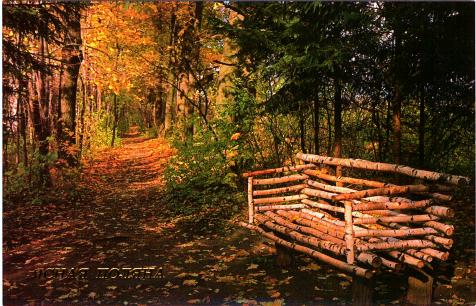
Lev Tolstoy's Favorite Bench

Lev Tolstoy's Favorite Bench

I recently downloaded and read from Google Books Tolstoy’s novella Hadji Murad. It’s one of the very last pieces of fiction he wrote, finishing it in 1904, published in 1911, the year of his death. The short novel, about 200 pages on an ereader, has always been praised as an exquisitely crafted work of art. Tolstoy allows the structure and interplay of events to speak for themselves, eschewing nearly all temptation to explain to the reader his intentions and meaning. For precisely this reason, the book may be an especially challenging one. Before stating what I think of Hadji Murad, I must touch on my very long relationship with Tolstoy.

As a young undergraduate at Eastern Michigan University in 1976, I used to read Tolstoy when I was supposed to be studying more important things. I would go to the library and comb through the many feet of his Collected Works, devouring many of the more obscure, less-read books by him. While taking classes in Shakespeare, Chaucer, and the romantic poets, I reveled in his works What Is Art?, “Essay on Shakespeare,” and The Kingdom of God Is Within You. I well realized these works were anathema to most of the ruling academic establishment, whom I was beginning to realize even as far back as then were sunk in doctrinaire nihilism. I thrilled to read a writer who believed literature could and should have a spiritual dimension, as do our lives, if we are at all awake and sensitive to the Divine.

From,  What is Art?:

“Special importance has always been given by all men to that . . . which transmits feelings flowing from their religious perception, and this small part of art they have specifically called art, attaching to it the full meaning of the word. That was how men of old — Socrates, Plato, and Aristotle — looked on art. Thus did the Hebrew prophets and the ancient Christians regard art; thus it was, and still is, understood by the Mahommedans, and thus is it still understood by religious folk among our own peasantry.”

“The business of art lies just in this, — to make that understood and felt which, in the form of an argument, might be incomprehensible and inaccessible. Usually it seems to the recipient of a truly artistic impression that he knew the thing before but had been unable to express it.”

“Art is the transmission of feelings flowing from man’s religious perception.”

“So that good, great, universal, religious art may be incomprehensible to a small circle of spoilt people, but certainly not to any large number of plain men.”

How excited I was to discover Google Books now has, it seems, all that huge stretch of library shelf devoted to Tolstoy, available online. I eagerly downloaded all of it, including Hadji Murad, which I have thought of for years, sensing there was something in the book I needed to read, at the right time, now come, one of Tolstoy’s last artistic communications to the world.

As a young man Tolstoy had served in the Russian military in the Caucasus and in Crimea. His early stories and books reflect such experience. Late in life, he found himself recalling that time in the 1850s, while walking through a newly ploughed field in 1896, noticing a beautiful thistle that had been bent and broken by the plough. He tried to save it, but couldn’t, it was so damaged. The incident became a metaphor evoking the life of a local fighter Tolstoy had actually met, Hadji Murad, who was caught between the fanaticism of an Islamic war-lord named Shamil, who was intent on taking over Chechnya, and the Russians, who were extending their control into the area. Hadji Murad, as a man belonging to the more peaceful, local Sufi-like branch of Islam, known as Muridism, resisted the onslaught of Shamil’s jihad and fundamentalist fanaticism. Hoping to obtain troops from the Russians with which to fight off Shamil, Murad leads his band of men over to the Russians, ultimately being caught between the opposing forces. Tolstoy’s art lies in what he makes of and does with these facts of history. His perceiving sensibility and interpretation is subtle and attuned to the issues on all sides.

In the end, the Russians fail to provide Hadji Murad with the troops he needs to protect the Murid community from dominance by Shamil’s fanatics. He waits and waits while the incompetent and corrupt Russian political machine misunderstands what is involved and bungles the chance Murad has offered it. Tolstoy is especially insightful and scathing on the moral and spiritual corruption of the Russian elite and monarchy, contrasting its decline with the healthier vitality of Hadji Murad’s village simplicity, spiritual vigor, and self-less service to his community. Tolstoy’s art fully critiques both Western Christianity and the Islam of beheadings and the chopping off of hands. Murad’s values and beliefs, pure, unsullied, grounded in mystical prayer and communion, are crushed between the two. Finally despairing of Russian help, especially in time to rescue his own family, rendered pawns in Shamil’s intrigues, Murad decides to make a break from Russian confinement to save his family, an act misinterpreted by the Russian garrison which sends troops out after him, murdering his men and beheading him, no better than Shamil’s tactics.  Tolstoy allows the tragedy of Hadji Murad to resonate with the accents of art and vision, challenging the reader to understand.

It seems to me, though, that few have understood. For instance, Harold Bloom’s discussion of Hadji Murad overemphasizes the tragedy while neglecting the Islamic, Sufi resonance. Perhaps we have a larger context today in which we can begin to perceive the profundity of Tolstoy’s art, what with the collapse of Utopia in Power and the terrorism of 9/11. Despite some of his cranky personal flaws, mostly the result of his intense search for truth, his support of the anarchist Kropotkin, and so on, he was a tremendous artist of incredible vision and foresight, part of the tragedy of his time.

The ecopy of Hadji Murad that I read is in the epub format, which promises to become the standard for ebooks. After more than a decade of using numerous formats, I hope it does become the dominant one. There were only four to six minor errors in the text that I could detect without comparing it to a hard-copy. That’s down to about what one would expect to find in most published books, copy-editors seldom being up to snuff anymore. Other minor but annoying problems of formatting seem to be solved by the epub format.

Hadji Murad was a pleasure to read on my Sony Reader. The stage seems set for Google and other ebook publishers to make tens of millions of books, the knowledge and art of humanity, available online. I, for one, shall appreciate it.

Frederick Glaysher


Tags: , , , , , , , , ,

22 Jul 11 Of True Religion. John Milton.

Of True Religion and John Milton.

February 7, 2010

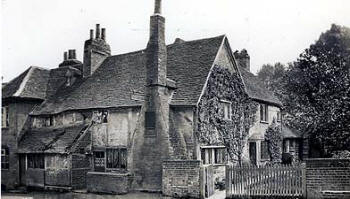
Milton’s Cottage

John Milton’s Cottage, Chalfont St Giles

In 1673, a year before his death, John Milton published a pamphlet entitled “Of True Religion, Heresy, Schism, Toleration, and what the best means may be used against the Growth of Popery.” His great poems were all behind him, death before him. Oddly, this pamphlet is little known to the general reader of Milton. After looking through a number of textbook collections of Milton for university courses, published during the last several decades, I was surprised to discover none of them contained “Of True Religion,” yet it was the last piece the man ever wrote. All the more startling is that “Of True Religion” presents a portrait of John Milton significantly at variance with the Puritan caricature of him that is often promoted by scholars in the university. All too often Milton is torn out of his historical time and not seen to be in fact the liberal that he was, clearly headed toward the Glorious Revolution of 1688, which further limited the monarchy and prepared the way for the modern efflorescence of individual liberty and freedom. To distort Milton into a one-dimensional Puritan suppresses the complexity of his actual thinking and life.

Since I visited last summer Milton’s home in Chalfont St. Giles, where he had lived fleeing the London plague of 1665, he was on my mind in the fall, and I was browsing online to see what I could turn up about him. I stumbled onto “Of True Religion” when I had downloaded a 19th Century edition of Milton’s prose, published in 1826, from Google Books. There it was in the table of contents. I suppose it was still possible back then for “true religion” to exist. How curious. I looked in my 1977 college edition of Merritt Y. Hughes’ Complete Poems and Major Prose, first published in 1957. Apparently, not major. In his opinion. After transferring it to my Sony Reader, to my surprise, I found Milton talking about toleration, leaving alone the “Lutherans, Calvinists, Anabaptists, Socinians” and Arminians, instead of persecuting them, harrying them out of the land, emphasizing what is held in common, versus sectarian. And how far should they be tolerated? “Doubtless equally, as being all Protestants.” He further stressed they should be allowed to preach and argue in their assemblies, public writings and printing. From our perspective, one might say, of course, but Milton was progressive and on the advancing edge of his day. To fail to recognize that fact obscures who he was.

Milton’s qualification is Protestantism. It’s fair to say Milton does not have much warmth of feeling for “popery,” or Catholicism in general, tending to vehement and even feverish denunciation. He’s concerned, like many in his time, with the grasping for “usurped” ecclesiastical and political power. He calls to mind for his readers England’s history under Catholicism when he writes that the pope “was wont to drain away the greatest part of the wealth of this then miserable land . . . to maintain the pride and luxury of his court and prelates.” Milton was not the kind of man to take lightly the “Babylonish yoke” of popery, or anything else for that matter. My English genes cannot but thrill in agreement and admiration for his spirited defense of liberty. However, it’s safe to say, I suspect, that while Milton was willing to extend freedom of conscience to fellow Protestants, which many of the time were not, he probably would have thought differently when it came to Buddhists, Muslims, Hindus, and people of other persuasions, lumping them all in there somewhere with popery—“idolatrous.” The ruined abbeys all over England stand witness to both the extent of Catholic exploitation and the fierce backlash it inspired. Milton is tame by comparison. But no universality for him. Milton was convinced he had the exclusive truth in Protestantism.

Similarly, some today, trying to revive or return to Christianity, as a dominant social organization, celebrate Milton, thinking he is the way back to an idealized past. But the past is past because it is past. There’s no going back in that direction. Why would one want to? The democratic pluralism of our time is much more dynamic and exciting, and, here’s the important fact, true. True religion, in our time, must recognize the non-exclusivism of religious truth—that all peoples, religions, and traditions taught and held, still hold and teach, to the degree they’re not atrophied or undermined by the nihilism of modernity, the same universal, spiritual insights, ideals, virtues, and truths. Far from exclusivism, far from the historicism and nihilism that attempted to discredit all religions and wisdom traditions, I aver, not that all religions are false, but that they’re all true.

With a nod to the long line of both Croatian Catholics and persecuted Huguenots that I also come from, I would say the great religions all provide a vision and understanding of the purpose of life, what it means to be a human being, that is deeply profound, non-utopian, non-quixotic, when properly understood, of how and why one journeys through this world. We need to know as much about the Unknowable Essence as possible, from every angle, every insight into Divine Mystery, that we might come to understand Him or Her or It, just a little bit more. I’m not willing to settle for anything less than the fullness of Being, striving for It. To relinquish the thousands of years of human meditation on the Divine Being would be too great a loss. What then the point of life? The Exclusive Truth is beyond all attempts to understand Him. I also argue for retention of all the nay-sayers, atheists, agnostics, and nihilists. They have an important part of the truth to tell, while having no more the exclusive truth than anyone else. Relax, there’s no reason to burn them at the stake or blow them up. Nor anyone.

While Milton urges Protestants, “who agree in the main,” to show forth “forbearance and charity one towards the other,” I would urge forbearance and charity for all, all the great religions and traditions, for this is what the logical, rational, reasonable development of modern democratic pluralism has already done, though we do not, I think, recognize and celebrate it for the highly significant achievement that it is. Too often, global society continues, in a sense, to think and act in terms of exclusivism, whether religious or secular, while more often in its lived experience rightly recognizing and respecting the multifarious ways and paths through life. To make our achievement more conscious and acknowledged, indeed, more than mere toleration, celebrated, is one of the challenges and goals of the 21st Century, all times, and a path toward universal peace and understanding. Understandably, the countervailing fear is usually about organization. But in the modern world people have increasingly come to realize that true religion is merely an “attitude toward divinity,” a frame of mind, a reverence for life, not an organization, best manifested as a distinctive quality of the individual.

Putting aside organizations and institutions, Milton writes, “True religion is the true worship and service of God, learnt and believed from the word of God only.” Unfortunately drawing from Paul of Tarsus, Milton embraces some of Paul’s more personal ideas and interpretations, and of the early Christian church, “to reject all other traditions,” instead of universality. Similar to the harm Paul’s teachings on misogyny have caused throughout the centuries, Paul’s bifurcation of humanity, into the “elect” and the “wayward,” has caused incalculable suffering and misery, all in the name of putative truth. All of the various forms in various traditions that have approached human nature in a similar manner have resulted invariably in analogous distortions and social dislocations, though his many good acts and writings conducive to cultivating love and community are timeless. Milton is at his best when he’s following what is universal in the Christian tradition.

Milton’s other prose writings helped disenfranchise the church from the state. He and the time understood well the threat and result of fanatical exclusivity in power, or grasping for it, as we do living now, as a result of the fanatical exclusivism of Islamist terrorism, reminding us of how serious all these issues really are. Separation of church and state is one of the undeniably great achievements of civilization, even, I would say, the Will of God. From lived experience, life just goes better when matters of conscience and belief are balanced with different viewpoints, consultation, people of various religious outlooks, and no religious faith or belief, the full range of human thought and belief; the great pool of humanity, swirling around, trying to make sense of it all, no one shoving the exclusive truth down anyone else’s throat, over the barrel of a gun, or with a bomb. What could be more obvious about our actual experience of what works, what produces a peaceful, harmonious society, or, at least, as close as we can get to one in this world? Even for John Milton, the great fear was slipping back into popery or anything oppressive and tyrannical. Not liberal by our standards today, but he was, by those of his own time, and headed in the right direction.

Frederick Glaysher


Tags: , , , , , , , , ,

21 Jul 11 John Milton. Harold Bloom.

John Milton

John Milton

John Milton. Harold Bloom.

Abdiel Agonistes…. October 24, 2000

John Milton’s reputation has unjustly suffered a diminution during the last two centuries. The romantics, repulsed by his religious theme of the earthly pilgrimage of the soul, corrupted his poem by maliciously interpreting Satan as the hero, despite Milton’s unequivocal condemnation of Satan and his equally lucid characterization of the repentant Adam as the true hero. T.S. Eliot and those who ape his opinions also find Milton the man and his religious beliefs repellent. The poets of the modern era deride Milton because, in general, they have abandoned religious belief and turned to vague forms of idealism, as in Whitman’s Democratic Vistas, and to the creation of idiosyncratic ersatzes, as in Poe’s Eureka. John Keats’s Endymion and the Hyperion poems fail as much because of their superficial content as their poor structure and execution. In Auden’s analysis, “the modern problem” hamstrings the romantics as much as Yeats or Pound. Milton never suffered from such a malady and hence the envious detestation he has received from minor poets who are unquestionably his inferiors. Milton possesses a serious vision of history and humankind that could only achieve full expression in the most demanding form of poetry–the epic. But most poets of the last few hundred years have not found themselves entrusted with such a vision. Much to the contrary, they excel in every imaginable type of turpitude and triviality that the human mind is capable of producing. Like Yeats they have often thrown together every decadent principle or superstition that has ever happened along. This sorry state of affairs has become so common in postmodern poetry that anyone who would attempt to restore epopee to its glorious heights of noble seriousness and serenity would find ranked against him every academic hack and, as Milton phrased it, every “libidinous and ignorant” poetaster who has “scarce ever heard of that which is the main consistence of a true poem.” Milton knew the “consistence of a true poem,” and both Paradise Lost and many passages scattered throughout his prose attest to it. In The Reason of Church Government he surveys the abilities of such masters as Homer, Virgil, Job, and Sophocles. Along with the modern loss of belief in God has gone his high and serious belief in the office of the poet. Equally banished from the modern conception of poetry is all respect for positive values, morals, and virtues. The story of twentieth-century literature is the abuse and misguided replacement of such healthy standards with the perversions of modernism and postmodernism. In brief, “the modern problem.”

Unlike in the work of Jacques Derrida and his academic flies, the “presence” of God is a reality for Milton. Here in the abstract Milton gives us what throughout Paradise Lost he has been dramatizing–the “principles and presuppositions” to which Adam, representative man, must obediently submit, not merely in Eden, but for the fulfillment of his life during his journey on the earthly plane. In Satan, Milton presents the picture of the rebel, almost a type of the Renaissance hero Benvenuto Cellini, who through pride usurps power and whose fundamental actions and motives have their most appropriate modern analogue, as many have observed, in the archvillains Hitler, Mussolini, Lenin, Stalin, and Mao. Such men fully embody the will to power that the nihilist Nietzsche, as Thomas Mann put it, glorified. Such totalitarian dictators were the inevitable product of the romantic fascination with Satan, as though he were a hero and not an arrogant aspirant after power. Such cultural confusion reveals itself in Goethe’s Faust as well as in Nietzsche’s Thus Spake Zarathustra.

Such errors in judgment, such fundamental confusion of values, mark the modern era and set it off from the spiritually healthier times of Dante, Langland, Spenser, and Milton–healthier only in terms of possessing to a degree a unified spiritual vision that provided universal standards with which to confront the damnable deeds of their day. Far from the banal optimism of the modern era, as in Whitman, they know that the long hard way of man is through suffering and turmoil and that the assurance Michael gives Adam about future generations abides eternally: “Doubt not but that sin / Will reign among them.” Despite Freud’s “freeing” man from sin, the twentieth century proved to be the most sinful in history, precisely because the unique spiritual reality of each soul and its fundamental limitations were denied. The violent, arrogant, insidious deeds of the archvillains of modern political nihilism alone account for the suffering and deaths of hundreds of millions of people, while much of the so-called intelligentsia of the West and East defended or prepared the way for the slaughter. Whereas Virgil denounced war except as the last resort for establishing peace, modern poets have often ignored the inhumanities of our century–save for those like Pound whose totalitarianism abetted the brutalizing of millions of innocents and the early Auden who approved “the necessary murder.” Here at the end of the twentieth century when humankind still stands technologically capable of destroying much of the vast expanse of the globe and much, though not all, of its population, here when a more trustworthy political form has yet to be securely established to channel the will of the citizens of the international community, epopee must again take account of the social domain and man’s earthly journey through these immense atrocities. For by faithfully treading the dark way of horror, by weighing the modern loss of belief, humankind may begin to regain the path in the twenty-first century, and, like Dante’s persona, attain the highest summit of peace and glory.

Frederick Glaysher


Tags: , , , , , , , , ,

20 Jul 11 Roadside Dog. Czeslaw Milosz.

Czeslaw Milosz

Czeslaw Milosz

A Roadside Dog. Czeslaw Milosz.

Antinomies…. October 24, 2000

In A Year of the Hunter, Czeslaw Milosz unequivocally writes, “Poetry’s separation from religion has always strengthened my conviction that the erosion of the cosmic-religious imagination is not an illusion and that the vast expanses of the planet that are falling away from Christianity are the external correlative of this erosion.” Road-Side Dog exudes this same consciousness, yet, interested only in Christianity, he fails to perceive that vast expanses of the planet have also left behind the Islamic, Hindu, Taoist, Confucian, and Buddhist religions.

Like his contemporaries, Milosz is a child of dualities and contradictions, as he discloses in Unattainable Earth: “Sometimes believing, sometimes not believing, / With others like myself I unite in worship.” Though “loyal and disloyal,” he performs what is in itself an act of affirmation. One reason for such tensions must be his recognition that we are “In an intermediary phase, after the end of one era and before the beginning of a new one.” In another entry he writes, “There is only one theme: an era is coming to an end which lasted nearly two thousand years, when religion had primacy of place in relation to philosophy, science and art. . . .” Milosz recognizes the validity of his own honest doubts and the abyss of evil and historical calamity that is swallowing everything before it, yet he does so while continuing to “unite in worship.” Similarly, in “Lecture V” of The Collected Poems, the persona affirms “We plod on with hope,” and then allows, “And now let everyone / Confess to himself. eHas he risen?’ eI don’t know.’” It was perhaps these lines that led Pope John Paul II to say to Milosz, as he reports in A Year of the Hunter, “You always take one step forward and one step back.” In an essay in New Perspectives Quarterly, Milosz describes himself as a believer, while in A Year of the Hunter he refers to an experience in church on Palm Sunday as an “intuitive understanding that Christ exists.” These contradictions achieve their fullest expression in “Two Poems” in Provinces: The first poem celebrates earthly life and its values, while the second poem, “A Poem for the End of the Century,” bitterly, ironically recalls the religious past. Of these two contrasting poems, Milosz writes in a headnote that “taken together” they “testify to my contradictions, since the opinions voiced in one and the other are equally mine.” To highlight either side over the other would be a distortion of his psyche. Milosz conveyed his complexity to the Pope when he replied, “Can one write religious poetry in any other way today?” I have often thought of Virginia Woolf’s Mr. Ramsay in To The Lighthouse, ascending the island rocks, exclaiming, in one of the most poignant settings of modern literature, “There is no God.”

Perhaps because Milosz perceives our age as an intermediary one, he finds it more possible than most poets to hold out hope for the future. His hope, though, as we have seen, is not naive, foolish, or unaware of the incessant disintegration. It is that of one tried by experience, who yet believes there are reasons for such a poem as “Thankfulness.” To give “thanks for good and ill” manifests a trust that transcends our usual human self-centeredness and that submits to the power of the mystery of being, a trust that acknowledges in another poem “They are incomprehensible, the things of this earth.” Such trust is also the prerequisite to finding “Eternal light in everything on earth.” Although from the viewpoint of traditional Catholic belief some might think such lines are suffused with vague gnosticism, accuse him of having fallen off from the faith, of “willing belief,” as he says of himself in The Land of Ulro, one must recognize the honest complexity of his commitment if one wishes to confront, as he has, the undeniable damage that has been visited upon all organized forms of religion and government during the modern era.

In reference to religion, while recognizing the undeniable damage, Milosz has often expressed his skepticism and uneasiness with Catholicism. Although he seems to favor at times reversion to Catholicism, suggests he himself is a heretic, harbors the conceit of possessing the true truth among the great religions, he also writes of going “forward, but on a different track,” of a “new vision,” “a new awareness,” “new perspectives,” as in A Year of the Hunter:

Why should we shut our eyes and pretend, rejecting theobvious, that Ancient Rome is again in decline, and this time it’s not pagan Rome under the blows of Christianity, but the Rome of the monotheists’ God? Since this, and nothing else, is the undeclared theme of contemporary poetry in various languages, obviously this conflict has already crossed the threshold of universal consciousness. . . . Perhaps . . . new perspectives will open up . . . .

Milosz has worked more deeply with the spiritual dislocations of modern life than any other poet of the twentieth century since T. S. Eliot.

In regard to government, Milosz’s experience prepared him to understand where we have been and where we are going in a manner unique among modern poets. All the more eloquently rings his plea in his Nobel Lecture for sanity eventually to prevail among the nations of the earth:

We realize that the unification of our planet is in the making, and we attach importance to the notion of international community. The days when the League of Nations and the United Nations were founded deserve to be remembered.

This realization of the importance of international community can be found throughout his writings. Its source, beyond his own experience, was, by his own testimony, his uncle, Oscar Milosz, poet and seer, who predicted the “triumph of the Roman Catholic Church.” Narrow Catholic hopes aside, history, lower case, moves toward the vindication of both of them, as well as of all those who have stood throughout this century for the further development of international institutions through which the nations may cooperate for the protection of the weak and vulnerable, for the protection of the little ones. If “There are no direct lessons that American poets can learn from Milosz,” the fault lies entirely with us and the age of academic criticism that has almost strangled the life out of poetry.

Frederick Glaysher


Tags: , , , , , , , , ,

19 Jul 11 Poetry of Arechi. Ryuichi Tamura.

Poetry of Arechi. Ryuichi Tamura.

Vanishing…. October 12, 2000

For Japan and its writers, the modern darkness deepens during the period of military fascism and World War II. With the defeat and unconditional surrender, immense shock waves rocked the entire culture calling into question the pseudo-Shinto and Confucian values Japan had based its society on for almost a century. As writers returned from one front or another of the war, they found a Japan devastated by the Allied bombing. Maebashi, for instance, where I lived for a few years, was reduced to rubble along with its bridges. Before long, the entire country was restructured by the Occupation. Japanese writers now understood much more deeply the experience of the Western World War I generation. Better than any other postwar poet, Tamura Ryuichi (1923-1998) registers, since his own hometown in the suburbs of Tokyo no longer existed, the shock and disorientation of the modern Japanese psyche. Briefly a student of Hagiwara Sakutaro, Tamura had little interest in classical Japanese poetry, which emphasized the unity of man and nature, but read widely in Western literature and was especially influenced by T. S. Eliot, Steven Spender, C. Day Lewis, and W. H. Auden, the last of whom Tamura eventually met in New York in 1971. In a literary magazine called Arechi or “wasteland,” Tamura and other postwar poets gave voice to the despair and horror they felt, unequivocally stating, in an early manifesto, “The present is a wasteland.” The first poem in which Tamura finds his true voice and distance from his material is the prose poem “Etching,” published in 1956:

Now he sees a landscape he saw in a German etching it appears to be an aerial view of an ancient city between twilight and darkness or a realistic drawing of a modern-day cliff being taken from midnight toward dawn This man the one I began to describe killed his father when he was young that autumn his mother went beautifully insane (tr. Christopher Drake)

The critic Ikuko Atsumi has said of this poem that it aims at a universal vision of East and West, ancient and modern. The extreme nationalism of the Japanese fascists now defeated, the “he” can view the fullness or “landscape” of Western culture, specifically German, declining into “darkness” or rising as “a modern-day cliff,” ominous, dehumanized, marked by loss and angst. Atsumi suggests the father “possibly refers to the emperor system in Japan, and the mother he made beautifully insane to Japan’s aesthetic consciousness.” Like the West, the East too descended into a wasteland of madness and violence, the ancient now discredited and rendered nugatory. This is the “Etching” come to light, etched into Tamura’s consciousness and all postwar Japanese writers of worth. Blending together the perspective of the subjective “I” and objective “he,” aware of the horror, Tamura introduces into Japanese poetry a voice of detachment, observing life outside his own personal existence with meditative restraint, seeking a deeper understanding of modern human experience.

Having known and read Tamura’s work for more than fifteen years, I have often thought of him as akin somehow to Robert Lowell. He has a memory of Japan’s past that he never idealizes, but works with and probes it, pondering always without sentimentality the modern and by-gone days. Like Lowell and so many postmodern Western poets, Tamura also goes through a time of fairly formalistic writing, but he seems to outgrow it and returns to engaging universal experience outside his own little personal consciousness. Many other Japanese poets, as in the United States, are still stuck in such solipsism. Saigyo and Basho both believed poetry must consider the transcendent and involve conceptual knowledge outside the self, not merely aesthetic formalism. As late as 1982, in what is one of his greatest poems, “Spiral Cliff,” Tamura looks soberly at modern world history. After the speaker reflects on a photograph of a deer “falling off a cliff” and wonders “what’s after it,” he says,

Our century ends without decadence/ after the night and fog of Nazi gas chambers/ after Soviet forced labor camps/ after two U.S. atomic bombs on Japan/ there’s no thrill left in killing,/ no fear of the soul, no crime in adultery. . . .

In “our century,” the values requisite for perceiving and defining “decadence” have disappeared, “crime and evil disconnected,” all restraining sense of the soul lost. As a result, unimaginable horror has been perpetrated in every region of the globe on an appalling scale affecting both the social and individual realms. Like a roller coaster, “our century ends on pure speed.” Recalling the photo of the deer, he thinks,

I’m afraid of high places/ the cliff in me/ am I the hunter/ or the prey?

The “high places” are both those of earlier mentioned “boardrooms / of huge corporations,” East and West, in a manner reminiscent of Kaneko Mitsuharu’s Book of Mud, and the “modern-day cliff” of confusion, now “the cliff in me.” The ambiguity of the question “am I the hunter / or the prey?” acknowledges the complexity of modern life where all are somehow complicitous in human tragedy. Terrified by “blank paper,” by “what dreams will live and die there,” Tamura accepts the writer’s obligation to struggle for values worthy of all human beings, not just Japanese.

Next in dream half nightmare, he sees his own inner cliff protruding “between dreams / spiraling” down. Waking in the dawn, lying horizontally across the bed, he reads the morning newspaper full of massacre and civil war:

Vanishing/ cliff dream/ vertical dream/ elementally/ Gone

All the dreams have vanished as off the edge of a cliff. Vertical dreams have been replaced by the horizontal, exactly the information that fills the newspaper. Like the best of modern writers, W. H. Auden or Robert Lowell, Tamura has the honesty and strength of intellect and spirit to recognize it is all “gone.” I believe his vision of modern life and Japan is true, for it has been my own experience, lived not only in Japan but also in the United States, where “without decadence” the culture sinks to ever more dehumanized levels of violence, depravity, and social fragmentation. The importance of  Ryuichi Tamura’s poetry has not been sufficiently recognized in the West, nor in Japan.

Frederick Glaysher


Tags: , , , , , , , , ,